

 SHARE
SHARE
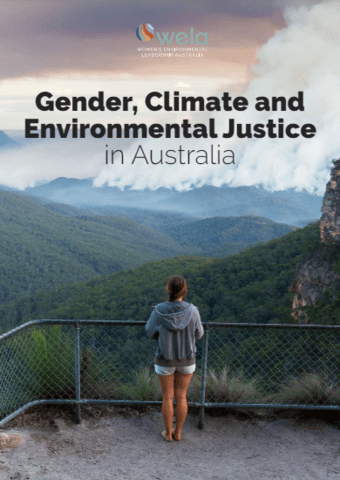
Gender, climate and environmental justice in Australia
| Attachment | Size |
|---|---|
 Gender, climate and environmental justice in Australia (report) Gender, climate and environmental justice in Australia (report)
|
4.71 MB |
|
Gender, climate and environmental justice in Australia (summary)
|
1.63 MB |
Research demonstrates that women are disproportionately impacted by climate change: they are 14 times more likely to perish in a disaster and represent 80 percent of people displaced by extreme weather.
Internationally, the links between gender, and climate and environmental issues have been recognised since the turn of the millennium. These links are recognised throughout the work of United Nations agencies and conventions, such as the United Nations Framework Convention on Climate Change (UNFCCC). They are also widely recognised in international development work, including aid projects funded by the Australian Government. However, there has been only limited public discussion of the gendered nature of climate and environmental challenges within the Australian domestic context – and such awareness has only permeated policy and investment in a piecemeal way.
This report addresses this gap, assessing research data and expert stakeholder perspectives from across Australia.
The report summarises what we know about the gendered impacts of climate and environmental issues and explains why gender diverse leadership is critical to solving these challenges, before ending with a series of key recommendations focused upon: leadership and decision-making; policymaking; finance and investment; the gendered nature of disasters; international commitments; diverse voices and sectors; and a clean and caring economy.
Key recommendations:
- Support more women and gender diverse people into leadership and decision-making positions across government, industry, and not-for-profit sectors, including women from diverse cultural and community backgrounds.
- A gender lens is needed across all funding from government, industry, investors, philanthropy, academia and the NFP sector so that climate and environmental finance is more effective, equitable and gender-responsive.
- Development of a Gender, Climate and Environment Strategy will ensure Australia meaningfully meets its international obligations to implement gender action plans. These would establish measures for evaluating progress and develop best practices in gender-responsive climate and environmental policymaking for state and local governments.
