

Organisation
University of Cambridge Institute for Sustainability Leadership
Owning Institution:
Acronym:
CISL
Alternate Name:
Cambridge Institute for Sustainability Leadership
Website:
Report
Global leadership in an age of turbulence
In response to the challenges faced by society and those in positions of leadership, CISL convened a multi-sectoral Global Leadership Summit in February 2024. Through discussions ranging across geopolitics, global governance, domestic politics, economics, finance and technology, the summit sought to answer the question - what leadership is needed now, and from whom? This report...
Report
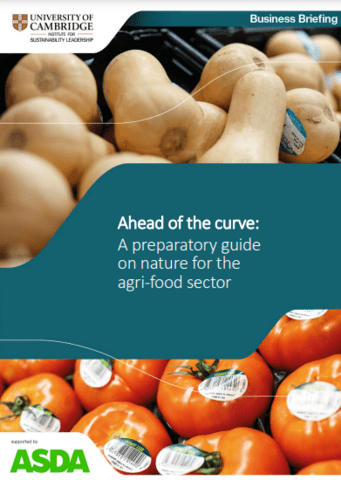
Ahead of the curve: a preparatory guide on nature for the agri-food sector
The integration of nature-related risks and opportunities into business strategy planning is becoming increasingly essential, particularly within industries on the frontline of nature action such as the agri-food sector. This short guide delineates a structured approach for businesses in this sector to understand and engage with the nature agenda effectively.
Briefing paper
Climate and nature: a route to mutual acceleration
Nature underpins the functioning of society and the economy – but it is in crisis and is getting worse. This briefing sets out six critical actions for business, government and financial institutions to transform societies and economies towards a nature positive future.

Report
Modelling it all: secondary perils in a warming world
This report seeks to understand how the insurance industry can refine the way it defines, measures and underwrites secondary perils amidst an evolving climate risk landscape. The report also outlines key issues the insurance sector faces regarding secondary perils and the surrounding discourse, and identifies the main challenges that inhibit the industry from taking requisite...

Report
The case for living wages
As a key pathway to addressing poverty, living wages are rich in business benefits. This report argues that the payment of living wages remains one of the most powerful routes to help people out of poverty, realise human rights, and achieve the Sustainable Development Goals (SDGs).