

Sole parents
Alternative labels
Single parents
Briefing paper
Policy brief: ending weaponisation of the child support system
The weaponisation of the child support system has emerged as a recurrent mechanism for perpetration of financial abuse, with cascading consequences for single mothers and their children. This policy brief outlines systemic flaws in Australia's child support framework and proposes targeted reforms that prioritise women's safety and economic security.
Report
Child poverty in Australia 2025
Nearly one in six Australian children are growing up in poverty. This report outlines the current and future impacts of rising rates of financial deprivation on child wellbeing. Key drivers are identified as rising housing and rental costs, slow wage growth compared to living costs, and families on low or fixed incomes falling behind.
Working paper
The declining wellbeing of sole parents in Australia in the 21st century
Sole parent families, primarily headed by women, experience considerable social and economic disadvantage. Despite this, there is limited research that shows the specifics of this disadvantage. This research fills this gap through a detailed examination of several indicators measuring social and economic wellbeing for sole parents for the last 25 to 30 years in Australia.
Report
Valuing and embedding lived and living experience at The Wyatt Trust
This report details the work of a philanthropic organisation to prioritise and embed the voices of lived and living experience in its work to create a future in which all South Australians are free of poverty. The report asserts that embedding lived and living experience must, at the very least, be a consideration for service...
Report
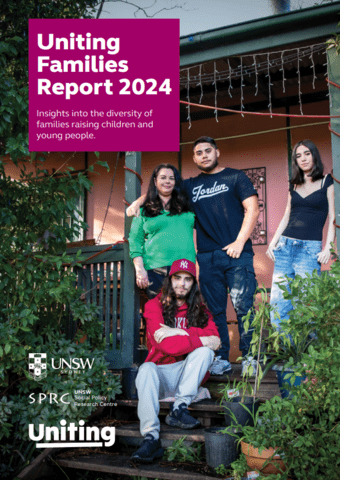
Uniting families report 2024: insights into the diversity of families raising children and young people
The report provides insights into the diversity of families and how their experiences differ. It highlights the many variations in experiences of these families in relation to health, finances, housing, education and community and underlines the need for policymakers to design systems, laws and services with the full range of family experiences in mind.