

First Peoples economic conditions
Alternative labels
Aboriginal Australians economic conditions
Working paper
Area-level socioeconomic outcomes for Aboriginal and Torres Strait Islander Australians in the 2016 and 2021 Censuses
Since the 2001 Census, the Centre for Aboriginal Economic Policy Research (CAEPR) has developed the Indigenous Relative Socioeconomic Outcomes (IRSEO) index to assist Indigenous communities and organisations in advocating for resource allocation based on relative needs, and assist governments in directing services toward areas with the most significant impact on Indigenous populations. This study replicates...
Report
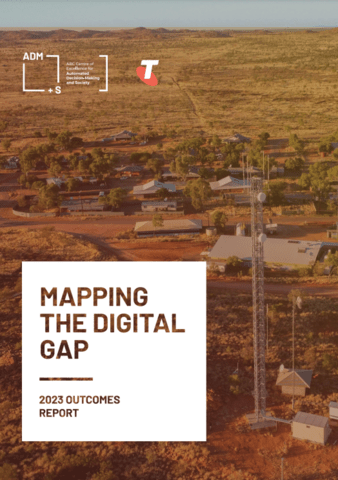
Mapping the digital gap: 2023 outcomes report
The Mapping the Digital Gap project, established through the ARC Centre of Excellence for Automated Decision-Making and Society (ADM+S), in partnership with Telstra in 2021, is the first comprehensive study of remote First Nations communities’ participation in, and access to, the digital economy. This report provides an update on the research conducted to date.

Report
Report of the First Nations Women’s Economic Participation Review
This review is the New South Wales Government’s first step in identifying the specific barriers to economic participation experienced by First Nations women.
Discussion paper
Advancing Aboriginal interests in the New South Wales renewable energy transition
As the New South Wales government steers the transition of the energy system to renewable energy, this research examines what opportunities this presents for Aboriginal communities.
Report
Joining the real economy: a quantitative mapping of the economic potential of remote Indigenous communities
The disadvantage of remote Indigenous communities is well understood. However, governments are yet to develop an effective solution for resolving this situation. Utilising the latest ABS Census data and other key datasets, this paper quantitatively demonstrates that it is possible for remote communities to be participants in real economies.