

Long-term future
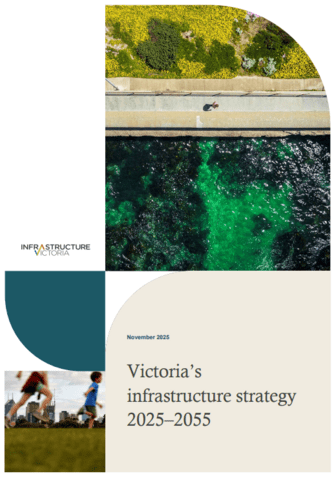
Strategy
Victoria's infrastructure strategy 2025–2055
Victoria's 30-year infrastructure strategy provides a practical roadmap for action over the next 30 years across a broad range of public policy areas including housing, energy, transport and social infrastructure. The updated strategy makes 45 recommendations to the Victorian Government and also identifies 8 future options for the government to consider.
Guide
The national strategy playbook: guidance on the cycle of national strategy
The playbook is a practical and open-source account of what national strategy should look like in the United Kingdom (UK) – to make the UK more long-term, bolder in solutions, and able to mobilise all national capacities, not just central government. The playbook sets out the steps, stakeholders and tools involved, offering choices to suit...
Report
Australian science, Australia’s future: science 2035
This report examines the capability of Australia’s science system, its ability to compete and collaborate globally, and its contribution to the nation’s economy, security, health and quality of life. An investigation of scientific capability needs by 2035 found Australia has gaps – in workforce, infrastructure and coordination – that will cripple its ability to meet...

Working paper
Long-term, national strategy: designing a contemporary practice of national strategy
This paper sets out to examine how governments come to a national view of what really matters over longer time horizons, the ways governments can best confront and tackle future problems, and how the configuration, mechanisms and capabilities of the state can best enable the pursuit and delivery of long-term outcomes for citizens.
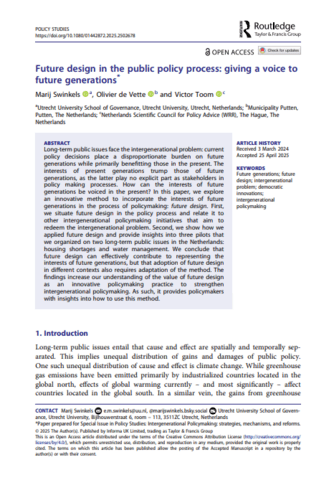
Journal article
Future design in the public policy process: giving a voice to future generations
Long-term public issues face the intergenerational problem: current policy decisions place a disproportionate burden on future generations while primarily benefiting those in the present. This paper describes future design, an innovative method to incorporate the interests of future generations in policymaking. It concludes future design can effectively contribute to representing these interests, but requires adaptation...