

Torres Strait Islander people
Alternative labels
Torres Strait Islanders

Guide
Framework for governance of Indigenous data
This framework has been prepared to guide the Australian Public Service (APS) on how to build strong governance over Indigenous data held by the Commonwealth. The Framework aims to provide Aboriginal and Torres Strait Islander people greater agency over how their data are governed within the Australian Public Service so government held data better reflects...
Report
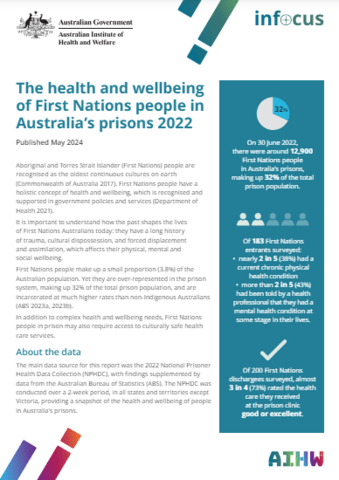
The health and wellbeing of First Nations people in Australia’s prisons 2022
Aboriginal and Torres Strait Islander people are over-represented in Australia’s prisons. First Nations people in contact with the criminal justice system often have complex health and wellbeing needs, and may require access to culturally-safe health care services. This report provides an overview of related statistics from data taken from the 2022 National Prisoner Health Data...
Guide
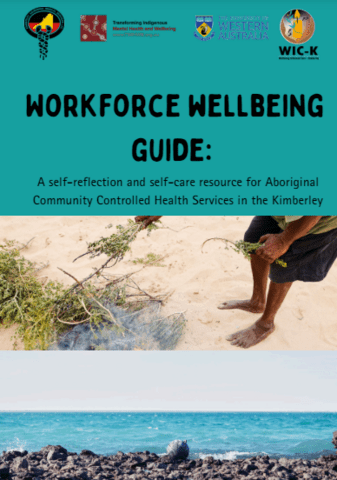
Workforce wellbeing guide: a self-reflection and self-care resource for Aboriginal Community Controlled Health Services in the Kimberley
This guide is designed to provide the Aboriginal Community Controlled Health Service (ACCHS) workforce in the Kimberley with information about wellbeing in the workplace. The guide focuses on the role of self-reflection and self-care in safeguarding and promoting worker wellbeing.

Report
Towards a theory of Indigenous contact with the criminal justice system
The authors of this report argue that measures to reduce illicit drug and alcohol use, improve school retention and improve economic outcomes for Indigenous Australians are essential if Australia is to achieve any long-term reduction in the scale of Indigenous over-representation in prison.

Report
Towards an understanding of Indigenous arrest
This study examines the correlates of First Nations contact with the criminal justice system. Key risk factors include membership of the stolen generation, psychological distress, and having used illicit drugs and alcohol over the preceding 12 months. The latter increases the marginal risk of arrest by 14 percentage points.