

Intelligence organisations
Alternative labels
ASIO
Report
A national strategic warning intelligence capability for Australia
Australian Government decision-makers need time and insight to identify and prioritise threats (and opportunities) and devise effective responses. Strategic warning intelligence enables and empowers them to do so. This report contends that Australia's national intelligence community should develop a discrete, institutional strategic warning intelligence function—an Australian Centre for Strategic Warning.
Report
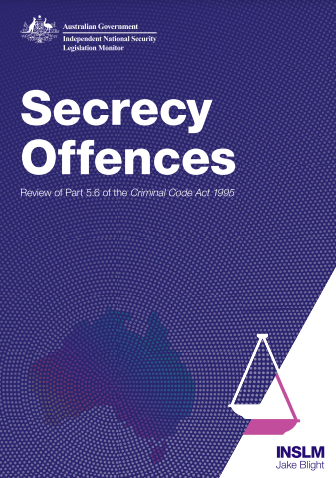
Secrecy offences: Review into Part 5.6 of the Criminal Code Act 1995
There is some information that, in the wrong hands, could genuinely harm Australia’s national interests. Secrecy offences that criminalise unauthorised dealing with and communication of this type of information have a role to play in deterrence and punishment. This report considers whether the offences in Part 5.6 of the Criminal Code operate in a way...

Report
Review of Integrity Concerns and Governance Arrangements for the Management of Regional Processing Administration by the Department of Home Affairs
This review report focuses on two main issues - the Australian Department of Home Affairs’ current procurement and contract management processes, with a particular focus on the garrison and welfare services contract, and a selective review of the media claims relating to previous regional processing contracts.
Report
Informing Australia’s next independent intelligence review: learning from the past
This report reflects on the experiences of the 2017 Independent intelligence review and the implementation of its recommendations, and draws lessons to inform the terms of reference, approach and suggested focus of the next review, which is likely to commence shortly.

Policy report
A regrettable necessity: the future of Australian covert action
This paper analyses the most unexamined component of Australia’s international statecraft - covert action. Such activity by intelligence agencies has become an increased focus of academic research internationally, and the paper introduces an Australian perspective to the debate.