

Report
Changing coverage of the Child Support Program and implications for research on separated parents
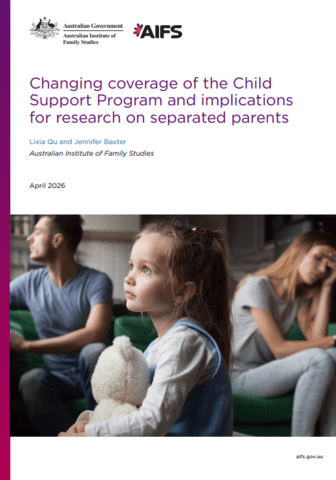
This report examines the extent to which cohorts of families are using the Child Support Scheme compared to nearly a decade ago. It is important to understand the drivers of the decline in the Child Support Program coverage and how separated parents, especially main carers, meet the financial needs of their children.

Report
Care time arrangements after parental separation
This research examines Australian trends in care time arrangements after parental separation. It explores trends in care time arrangements since 2015, including arrangements beyond shared care and differences by child age. These care time arrangements are one of the elements that determine how much child support transfers from one parent to the other.

Report
New mothers, employment and income
Mothers’ employment rates in Australia have increased over recent decades but having a child is still a pivotal event. This report explores some of the diversity in the employment patterns of new mothers. The findings further build the evidence base on mothers’ employment and could be used to inform policy in a range of areas.
Report
When parents live apart
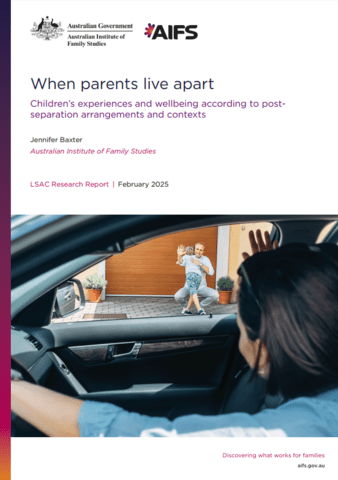
This research report explores the contexts, care arrangements, and co-parenting experiences of children whose parents live apart, using data from the Longitudinal Study of Australian Children. It finds that socio-economic disadvantage is faced by children with parents living apart and recommends that policy and family services account for and address it.

Literature review
Understanding preschool delivery
This rapid evidence review examines the impact of preschool delivery practices on child outcomes. It found mixed evidence regarding the impact of teacher qualifications but largely positive effects of preschool attendance, duration and quality. The review indicates a need for further research and more up-to-date data to inform current policy settings.