

 SHARE
SHARE
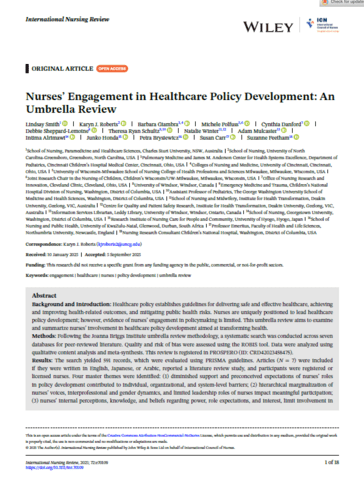
Nurses’ engagement in healthcare policy development: an umbrella review

Healthcare policy establishes guidelines for delivering safe and effective healthcare, achieving and improving health-related outcomes, and mitigating public health risks. Nurses are uniquely positioned to lead healthcare policy development; however, evidence of nurses’ engagement in policymaking is limited. This umbrella review aims to examine and summarise nurses’ involvement in healthcare policy development aimed at transforming health.
The review highlights that nurses and midwives are frequently marginalised in policy fields – all levels of healthcare policymaking from local service providers to local, state and national government. This exclusion not only diminishes the profession’s influence but also leads to health policies that may fail to reflect the realities of family and community healthcare needs.
As frontline professionals, nurses and midwives possess deep insights into patient care, family needs and systemic inefficiencies. Their meaningful engagement in policy development is essential for creating health systems that are fit for purpose, equitable, practical and sustainable.
Empowering nurses and midwives to participate in policy development is both a matter of professional equity and a strategic imperative in supporting family health. Their unique perspectives are vital to shaping policies that enhance care quality, accessibility and safety across health systems.
Key findings
- The review identifies a critical need for structural reform, leadership development and the integration of health policy education into nursing and midwifery curricula.
- Nurses and midwives are the professional voice of people and families in need of healthcare. However, they face systemic barriers due to entrenched hierarchies, insufficient education in policy processes and limited leadership pathways and organisational support.
- At the individual level, challenges include inadequate policy education, internalised perceptions of limited influence and a lack of mentorship.
- These factors collectively contribute to their exclusion from policymaking processes, reinforcing their perceived roles as policy implementers rather than active contributors.
Recommendations
- Integrate health policy education into nursing and midwifery education programs.
- Invest in leadership development and structured mentorship initiatives.
- Reform organisational frameworks to support nurse-led policy contributions.
- Recognise nurses and midwives as key stakeholders in health system governance.
