

Organisation
National Disability Research Partnership
Owning Institution:
Acronym:
NDRP
Website:
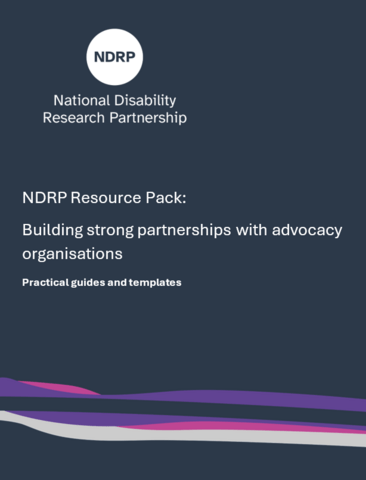
Guide
Building strong partnerships with advocacy organisations
This resource pack is a collection of practical tools to support research led by and with people with disability. It includes guides, templates and tips developed with people with disability and is designed to be adapted to your own context. It helps researchers build respectful, fair and inclusive partnerships with advocacy organisations.
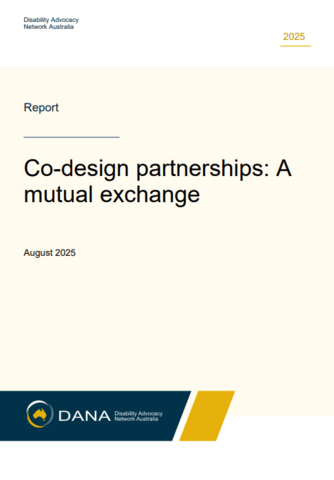
Report
Co-design partnerships: a mutual exchange
The purpose of the project was to create clarity around what is needed for disability representative and carer organisations, disability advocacy organisations and other consumer-led and disability capacity strengthening organisations. To be able to be meaningfully involved in disability, involvement of these organisations is crucial across the research continuum.
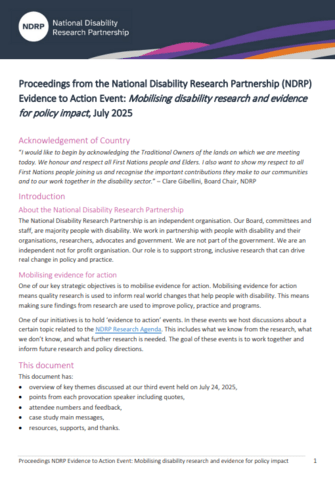
Conference proceedings
Mobilising disability research and evidence for policy impact
Proceedings of an event that brought together people with disability, advocates, policymakers, researchers, and leaders from the sector. The event, comprising short talks and group discussions, built on ideas from earlier events that focus on research led by people with disability, based on real experiences, and aimed at making a difference in policy and practice.
Video
Evidence to action: exploring knowledge mobilisation
This video recording is of an event exploring how research led by and with people with disability can be mobilised to influence real change in policy and practice. Key themes include how research leads to impact, best practice in sharing research accessibly and meaningfully, and collaboration between researchers, policymakers, advocates and service providers.
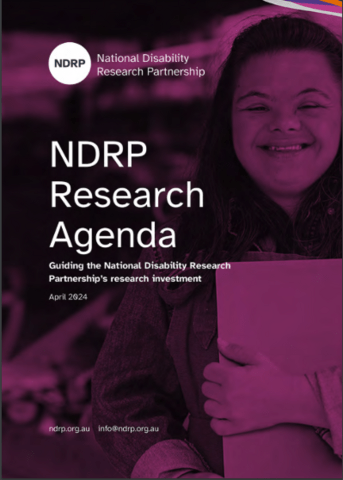
Policy
NDRP research agenda
Developed in collaboration with people with disability, their representative organisations and allies, this research agenda will guide the National Disability Research Partnership's research over the next 10 or more years.