

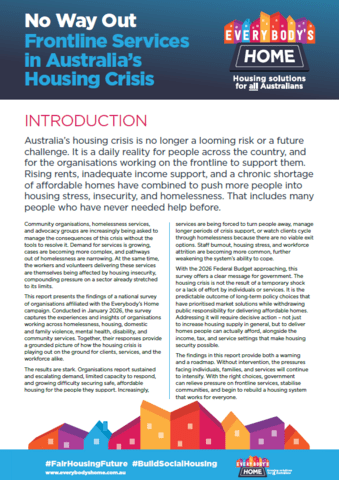
Survey Report
No way out: frontline services in Australia’s housing crisis
The report presents the findings of a national survey in January 2026 capturing the experiences and insights of organisations working across homelessness, housing, domestic and family violence, mental health, disability and community services. The responses provide a picture of how the housing crisis is playing out on the ground for clients, services, and the workforce...
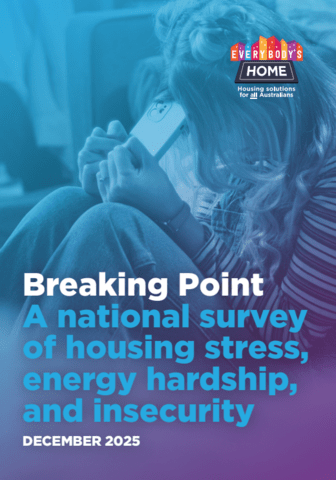
Survey Report
Breaking point: a national survey of housing stress, energy hardship and insecurity
Australia is experiencing a housing crisis. A 2025 survey was designed to document the lived experience of people affected by the crisis. This report presents the findings of the survey and the themes that emerge from respondents’ experiences. It shows how housing insecurity intersects with income inadequacy, energy hardship and declining housing quality.
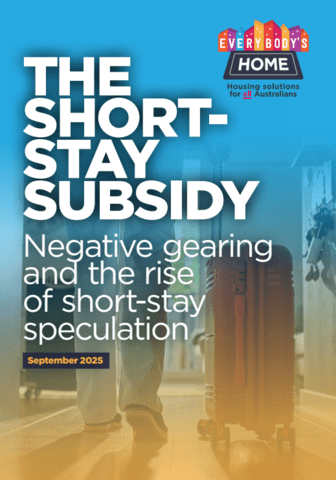
Report
The short-stay subsidy: negative gearing and the rise of short-stay speculation
This report examines the way in which housing tax concessions are undermining affordability in Australia, by subsidising the removal of homes from the long-term rental market altogether. The report estimates the cost in foregone revenue to the Federal Budget of negative gearing deductions claimed on short-stay investment properties. The report argues that this policy failure...
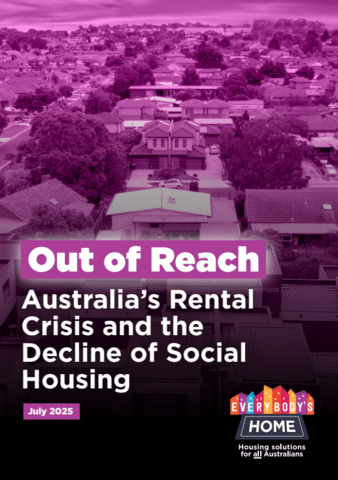
Report
Out of reach: Australia’s rental crisis and the decline of social housing
This report examines how rental prices have changed over the past decade. It shows that rents have soared in every Australian capital city. The findings show that Australia’s social housing system has failed to keep pace with demand. Rent increases are a national problem affecting people from all walks of life.
Report
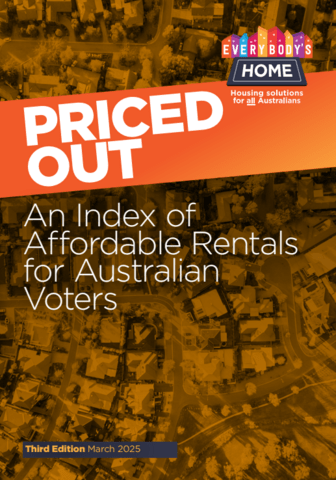
Priced out: an index of affordable rentals for Australian voters
The report examines how much of the incomes of people earning between $40,000 to $130,000 would need to be spent to rent a typical unit across regional areas and capital cities. It finds rental stress is no longer confined to those on lower incomes – it’s affecting professionals, essential workers and middle-income families. It provides...