

Person
Emmanuelle Walkowiak
Journal article
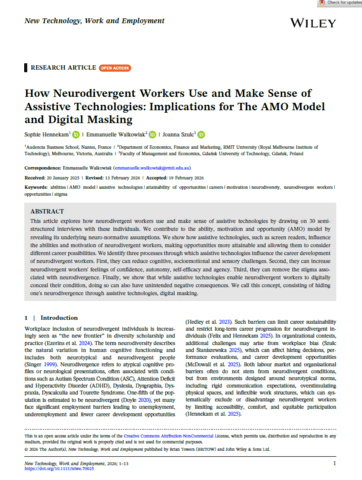
How neurodivergent workers use and make sense of assistive technologies
Assistive technologies reshape how neurodivergent workers experience ability, motivation, and opportunity. Tools like screen readers reduce cognitive, sensory and socioemotional challenges, boost confidence, autonomy and agency, and lessen stigma. They also enable digital masking – concealing neurodivergence – which can expand opportunities but may create unintended negative consequences.
Journal article
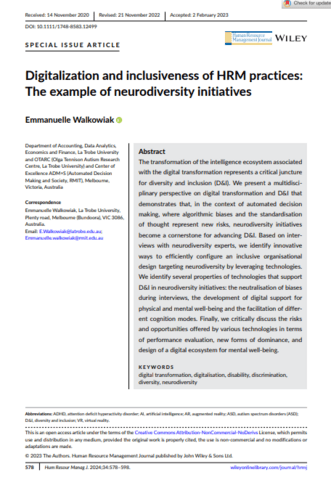
Digitalization and inclusiveness of HRM practices: the example of neurodiversity initiatives
This paper presents a multidisciplinary perspective on digital transformation and D&I that demonstrates, in the context of automated decision making, where algorithmic biases and the standardisation of thought represent new risks, neurodiversity initiatives become a cornerstone for advancing D&I. It identifies innovative ways to efficiently configure an inclusive organisational design targeting neurodiversity by leveraging technologies.
Submission
Submission to the Inquiry into the Digital Transformation for Workplaces
This paper argues that decisions made regarding the deployment of Generative AI technology in workplaces will fundamentally change how we work, produce, create and collaborate, and that it is time to act to ensure a safe, inclusive and productive technology deployment.