

Journal article
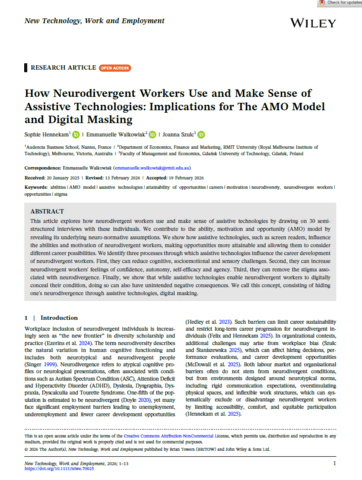
How neurodivergent workers use and make sense of assistive technologies
Assistive technologies reshape how neurodivergent workers experience ability, motivation, and opportunity. Tools like screen readers reduce cognitive, sensory and socioemotional challenges, boost confidence, autonomy and agency, and lessen stigma. They also enable digital masking – concealing neurodivergence – which can expand opportunities but may create unintended negative consequences.
Journal article
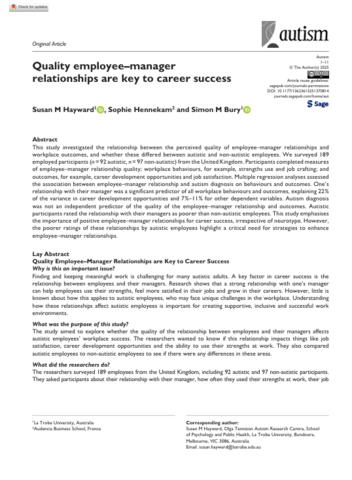
Quality employee–manager relationships are key to career success
This study explores how the quality of employee-manager relationships influences workplace success, particularly for autistic employees. It examines whether strong relationships enhance job satisfaction, career development and the ability to use their strengths at work. They find that a strong employee-manager relationship consistently predicts workplace success for autistic employees.
Journal article
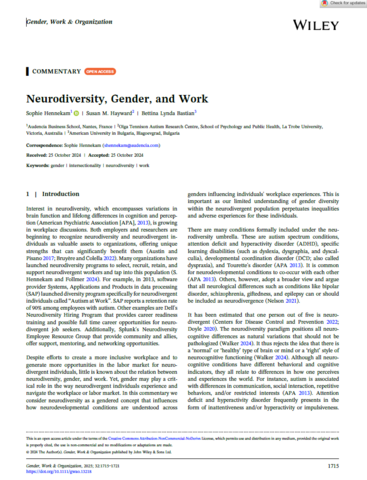
Neurodiversity, gender and work
This commentary considers neurodivergence as a gendered concept shaped by gender biases and societal norms and outlines several key issues or factors related to the gendered nature of neurodivergence. It calls for further exploration of the intersection of neurodiversity and gender to advance understanding and create more inclusive workplaces that recognise and celebrate diversity.