

Academic performance
Journal article
Creating a student-centered alternative to research guides: developing the infrastructure to support novice learners
Research and course guides typically feature long lists of resources without the contextual or instructional framework to direct novice researchers through the research process. This research offers academic libraries an alternative approach to existing methods of helping students.
Report
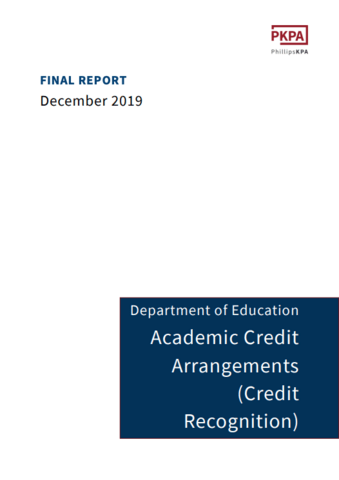
Academic credit arrangements (credit recognition): final report
The Department of Education, Skills and Employment commissioned PhillipsKPA consultants to undertake background research to support consideration of the adequacy of the regulatory framework for academic credit pathways in higher education. This report provides recommendations and draws together issues, practices, policy and regulation, and feedback from consultations.
Report
Insight and excellence: school success in New Zealand
The author presents three case studies showing how three secondary schools performed before and after The New Zealand Initiative's tool separated the contribution of family background from the contribution of each school.

Briefing paper
What do our users need? An evidence-based approach for designing new services
This paper serves as an introduction to Ithaka S+R's methodological approach, walks through the phases of work in the Community College Libraries & Academic Support for Student Success (CCLASSS) project to illustrate in practice the steps involved, and suggests how others can adapt this process for their own context.
Guide
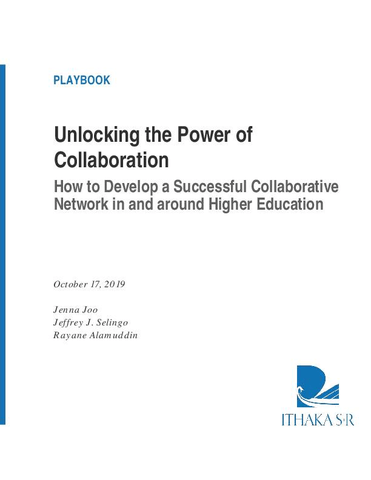
Unlocking the power of collaboration
This playbook discusses the conceptual grounding for higher education-focused networks and offers a set of key action steps on how to start and develop a successful network. It is based on a review of previous relevant research on collaboration and interviews with more than twenty network leaders, policymakers, and higher education scholars.