

Cultural safety
Alternative labels
Cultural competency
Description
A policy of ensuring respect for cultural and social differences in the provision of services.
Cultural safety demands actions that recognise, respect and nurture the unique cultural identity of a person and safely meets their needs, expectations and rights. (SafeWork NSW).
Report
Door-to-door for mental health: learnings from implementing the Assisting Communities through Direct Connection Project in an Aboriginal Community context
Each,
This report seeks to unpack the experience of Cherbourg, a small Aboriginal Community in Queensland, in implementing a doorknocking approach to understanding and supporting Community members’ mental health and social and emotional wellbeing. It highlights the need for mental health initiatives to be more responsive to the unique needs of Aboriginal Communities.
Report
Exploring help-seeking experiences in the health system among people with deafness or hearing loss and mental health concerns
This research highlights the lived experiences of people who are d/Deaf, Deaf, hard of hearing, or experiencing hearing loss –alongside carers and service providers – to uncover the systemic barriers they face when accessing mental health support. The findings inform actionable strategies to create more inclusive, person-centred care and long-term systemic reform. A full set...
Journal article
Connecting community: the role of Indigenous management in disability care
This paper presents findings from a 2023 Indigenist qualitative study exploring how disability service providers in Southeast Queensland support Indigenous peoples with disabilities. It found Indigenous-managed organisations demonstrated an Embedded Cultural Base model where cultural values were deeply woven into governance, service delivery, and community engagement.
Report
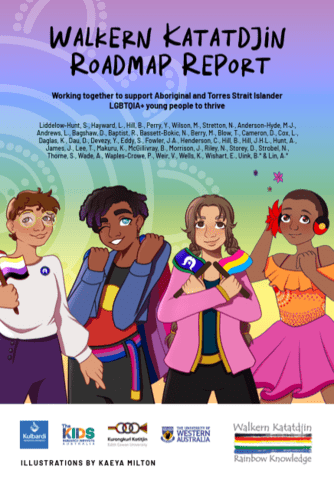
Walkern Katatdjin Roadmap report
This report details a roadmap for working together to support Aboriginal and Torres Strait Islander LGBTQIA+ young people to thrive. It empowers individuals, families, communities, services, and governments, highlighting existing good work, what can be done in the future and what funding and policies are needed.
Journal article
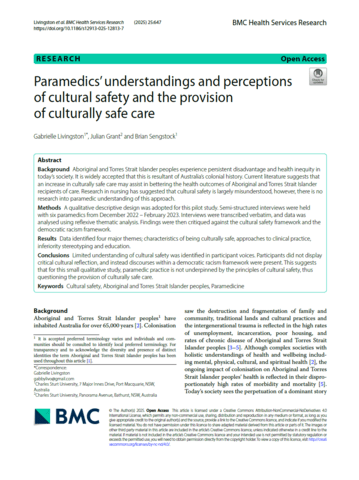
Paramedics’ understandings and perceptions of cultural safety and the provision of culturally safe care
This article reports on qualitative research into paramedics' understanding of culturally safe care, which is thought to assist in improving health outcomes for Aboriginal and Torres Strait Islander people. Findings suggest that paramedic practice may not be underpinned by the principles of cultural safety, calling into question the provision of culturally safe care.