

Disability awareness
Guide
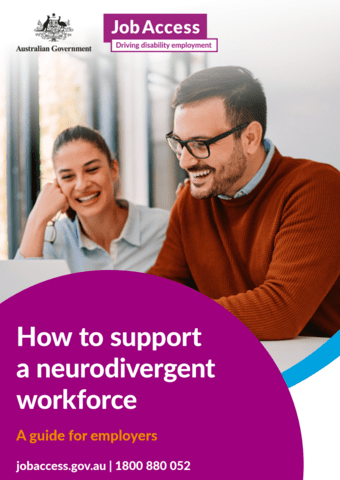
How to support a neurodivergent workforce
Overlooking neurodivergent talent is a missed opportunity. This guide is a starting point for those who want to raise awareness about neurodivergence and the benefits of hiring neurodivergent candidates. It covers how employers can support neurodivergent jobseekers and employees at work through inclusive policies and practices.
Survey Report
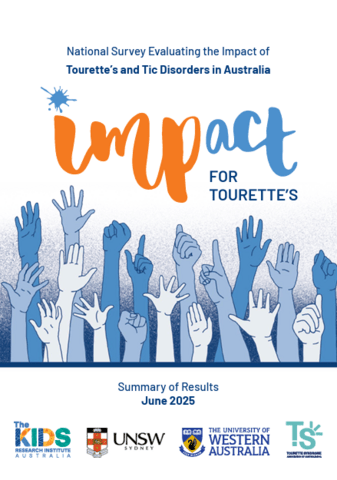
National survey evaluating the impact of Tourette’s and tic disorders in Australia
This report contains key recommendations to help improve the lives of those impacted by Tourette Syndrome and other tic disorders. The findings are relevant to individuals with tic disorders, their caregivers, medical and allied health professionals who support diagnosis and treatment, and teachers and employers who play an integral role in supporting their needs in...

Guide
Everyday communication: tips for supporting people with deafness or hearing loss
A practical, easy-to-follow guide designed to help Australians communicate more inclusively with people who are Deaf, deaf, hard of hearing, or have hearing loss. This tip sheet offers straightforward, real-world advice such as facing the person, reducing background noise, speaking clearly (not loudly), and asking individuals how they prefer to communicate.
Guide
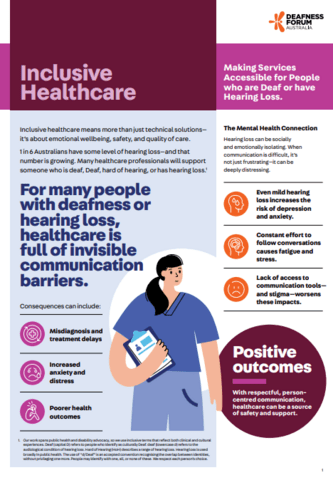
Inclusive healthcare: making services accessible for people who are deaf or have hearing loss
A practical guide designed to help healthcare providers deliver respectful, person-centred care to people who are Deaf, deaf, hard of hearing, or have hearing loss. It explores how communication barriers in healthcare can lead to misdiagnosis, distress, and poorer outcomes and offers simple and effective strategies.
Guide
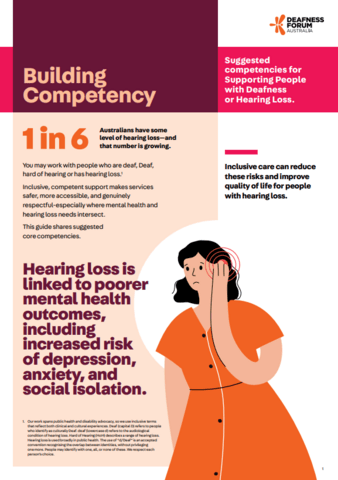
Building competency: suggested competencies for supporting people with deafness or hearing loss
A practical guide designed to help professionals provide more inclusive, respectful, and effective support to people who are Deaf, deaf, hard of hearing or have hearing loss. The guide outlines core competencies based on lived experience, including understanding the emotional impacts of hearing loss, communicating clearly, respecting individual communication preferences, and using trauma-informed, culturally aware...