

Intimate Partner Violence (IPV)
Briefing paper
Family violence prevention programs in Indigenous communities
Family violence needs to be understood within broader contexts as both a cause and effect of social disadvantage and intergenerational trauma, poor parenting, and substance misuse. It remains a critical social policy issue, placing a huge burden on communities, especially women and children. Although relevant national policies and plans are in place, the scale and...
Strategy
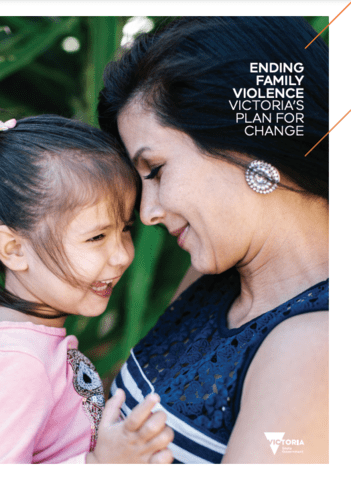
Ending family violence: Victoria's plan for change
This strategy document outlines how the Victorian government will build a future where all Victorians live free from family violence, and where women and men are treated equally and respectfully.
Report
Examination of the burden of disease of intimate partner violence against women in 2011: final report
Exposure to intimate partner violence (IPV) has serious health outcomes for Australian women and their children, and its prevention is a recognised national priority. Burden of disease studies measure the combined impact of living with illness and injury (non-fatal burden) and dying prematurely (fatal burden) on a population. This report estimated the amount of burden...
Report
Family violence assessment and intervention guideline: child abuse and intimate partner violence
This Guideline, the Family Violence Assessment and Intervention Guideline: Child Abuse & Intimate Partner Violence (2016) replaces the Ministry of Health’s 2002 Family Violence Intervention Guidelines: Child and Partner Abuse. The revision has been informed by contemporary international and national research and health guidelines for responding to victims of violence, extensive consultation with the health...
Journal article
Identifying and responding to men who use violence in their intimate relationships
This article aims to describe how GPs can identify and respond to men who use violence in their relationships. It takes into account that male perpetrators are not a homogenous group, coming from all socioeconomic and cultural groups.