

Military equipment
Report
The cost of defence: ASPI Defence budget brief 2025–2026
Australia's security challenges cannot be borne by the Department of Defence and armed forces alone. Australian governments have failed to deliver a comprehensive approach to national security. This report examines the government’s national security spending as a whole and reviews the attention given to the nation’s preparedness and resilience. It provides eight recommendations.
Strategy
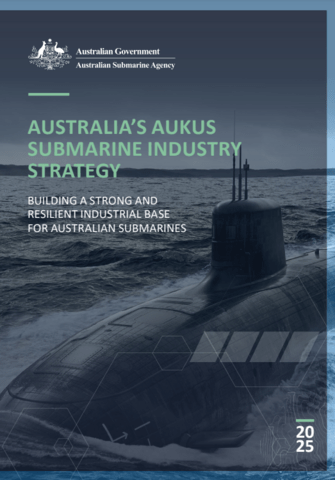
Australia’s AUKUS submarine industry strategy
This strategy identifies the conditions to develop the sovereign industrial capability needed to deliver, operate and sustain future conventionally-armed, nuclear-powered submarines, while also ensuring Australia's existing Collins class submarines are sustained and upgraded until their eventual withdrawal from service. The strategy sets out five critical lines of effort to boost Australian industry uplift.
Position paper
The US alliance, the North, and cultural change
This paper highlights that the national security risks faced now are in Australia's region. It proposes a clear focus on the defence of Australia and its northern approaches. The paper also addresses the critical nature of Australia's relationship with the USA. It provides six recommendations.
Position paper
Funding the defence of Australia
Contending that Australia is unprepared in facing its most challenging security environment since the Second World War, this paper's key recommendation is to increase defence expenditure from 2% to 3% of GDP. Other recommendations bolster the case for how a government could dramatically lift defence spending and see quick and positive increases in military capability.
Position paper
Right here right now: unleashing Australian know-how to grow military power fast
This paper argues that urgent reform of the defence sector is needed in order for the Australian Defence Force to meet the challenges of a deteriorating strategic environment. It calls for reform of Defence's procurement systems to reduce Australia's dependence on large, foreign-owned contractors and invest in a more varied, local and responsive supply chain.