

Juvenile offenders
Alternative labels
Youth offenders
Youth violence

Report
Sexual offending in Australia 2023–24
This statistical report covers sexual offending proceeded against by police in all Australian states and territories for the period 1 July 2023 to 30 June 2024. The report provides data on sexual offenders, sexual offence victims, youth offenders and adult offenders. In 2023–24, police proceeded against 10,359 individuals for sexual offences in Australia.
Report
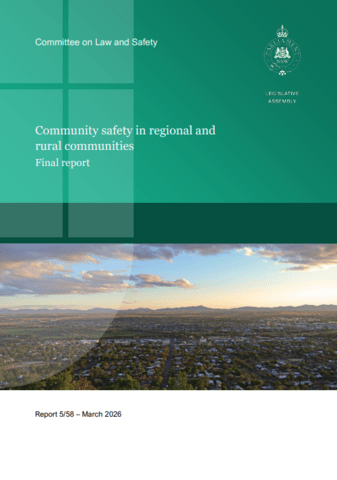
Community safety in regional and rural communities: final report
The final report from an inquiry into community safety in regional and rural New South Wales. The report mainly focusses on issues related to policing, young people’s experiences of the justice system and legislative frameworks. It makes 7 findings and 15 recommendations. Several recommendations are aimed at addressing issues regarding the youth justice system.
Submission
Submission: Australia’s youth justice and incarceration system
This submission highlights how the Australian youth justice system is failing children and young people through early exclusion at school, missed disability support, unsafe detention practices and inconsistent access to education. The submission calls for strong Commonwealth leadership to set enforceable national standards that protect children’s rights and safety across all jurisdictions.

Report
The links between childhood sexual abuse victimisation and adolescent offending
Child sexual abuse (CSA) victimisation has been linked to a greater risk of engaging in juvenile offending broadly, and sexual offending specifically, for male youth. This study used data and clinical information from a Queensland specialised service to examine the links between CSA victimisation experiences and sexual offending. Findings highlight the need for early intervention...
Report
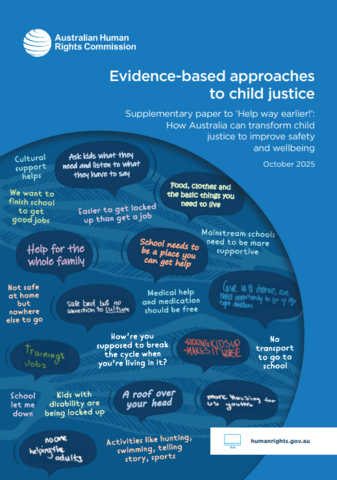
Evidence-based approaches to child justice
This report contains six case studies from Australia and around the world that are examples of evidence-based approaches to reforming child justice systems. It shows how primary prevention, early intervention, integrated services and therapeutic community-based approaches that emphasise family and cultural connections can transform outcomes for children.