

Emissions reduction
Alternative labels
Carbon abatement
Emission reduction
Report
How congruent is Budget 24 with New Zealand’s climate commitments?
In this report, the authors assess the degree to which Budget 2024 is consistent with New Zealand’s climate change commitments. This is an exploratory approach, which was first used in 2023 to measure the impacts of Budget 2023 spending, including tax expenditure and any major regulatory changes.
Report
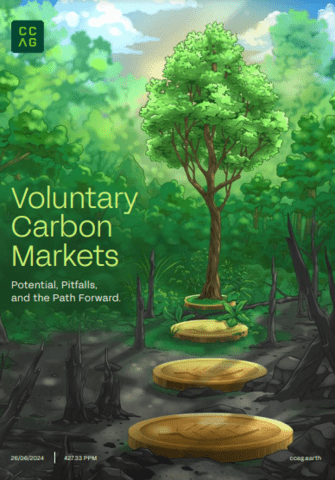
Voluntary carbon markets: potential, pitfalls, and the path forward
Scientific principles and transparency must lead the conversation about what 'counts' for carbon credits to build confidence in the voluntary carbon market (VCM). This report outlines a roadmap for the VCM to overcome recent criticism and rebuild trust through science by supporting projects that deliver real emissions reductions, as well as redistribute finance and meaningful...
Strategy
2024 Integrated System Plan for the National Electricity Market: a roadmap for the energy transition
AEMO’s Integrated System Plan (ISP) is a roadmap for the transition of the National Electricity Market (NEM) power system, with a clear plan for essential infrastructure that will meet future energy needs. The 2024 ISP confirms that renewable energy, connected by transmission and distribution, firmed with storage and backed up by gas-powered generation, is the...
Report
The economics of net zero
This paper sets out key economic concepts associated with the broad climate policy target of net zero emissions that has been adopted by many nations and all Australian jurisdictions. It introduces the conceptual frameworks economists use to understand the causes of and solutions to climate change.
Report
How an accounting shift could conceal millions of tonnes of coal mine emissions
This report investigates the historical implementation and potential implications of expanding the current application of company-led reporting for open-cut coal mines across Australia. It does so through an assessment of eight operating and two proposed coal mines, and a comparison of emission reporting under respective state-based emissions factors.