

Electricity distribution networks
Report
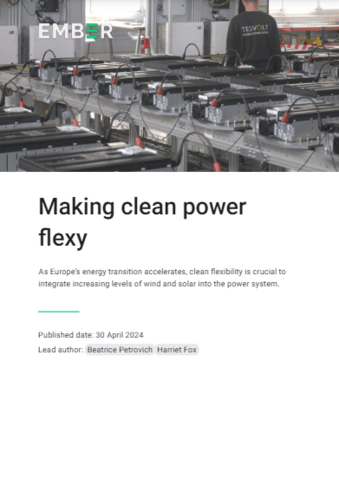
Making clean power flexy
This report provides an overview of clean flexibility in the European Union (EU), focusing on battery storage and demand side flexibility as two key enablers in the transition towards a clean power system. The paper analyses the current state-of-play in the EU regarding these solutions, examines outlooks for future deployment, and presents relevant policy options...
Report
Seize the decade: how we empower Australian communities and cut climate pollution 75% by 2030
Australia’s shift to clean energy is well underway – visible on our rooftops, in our homes, neighbourhoods and businesses. This report provides an in-depth pathway for Australia to make deeper, genuine and permanent cuts to climate pollution by 2030.
Working paper
Systems dynamics on the road to zero emissions: a primer
This working paper provides a systematic approach for modelling the economics of variations in output produced by weather-dependent generators and interdependencies between technologies. It shows how variations in output affect the growth rates of different technologies along the low emissions trajectory.
Report
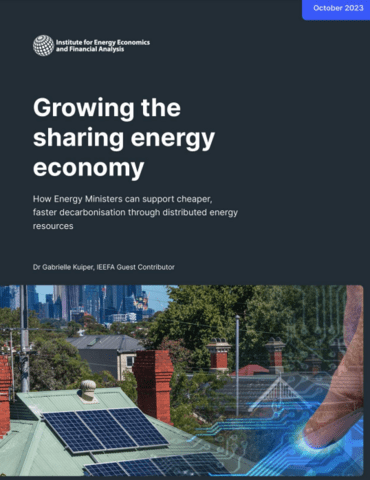
Growing the sharing energy economy
This report from IEEFA highlights that consumers’ purchases of Distributed Energy Resources (DER), such as rooftop solar, battery storage and demand-responsive appliances, can unlock faster decarbonisation and lower energy bills if Australian energy ministers take supportive action.

Report
NSW electricity supply and reliability check up
This report covers a very broad range of topics related to the supply and reliability of electricity supply in New South Wales at a time of energy transition. The transition is driven by the need to decarbonise the state’s electricity supply in line with the commitment to net zero emissions by 2050.