

Plant shutdowns
Alternative labels
Closing of factories
Power plant closure
Plant closures
Report
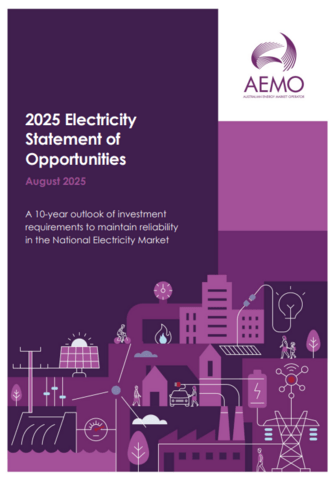
2025 Electricity statement of opportunities
A 10-year outlook on the investments needed to maintain reliability in the National Electricity Market (NEM). It highlights the opportunities for market participants, investors, governments and other jurisdictional bodies to invest in new assets and systems. Assessments reflect an improved reliability outlook relative to the 2024 outlook as committed developments have increased.
Discussion paper
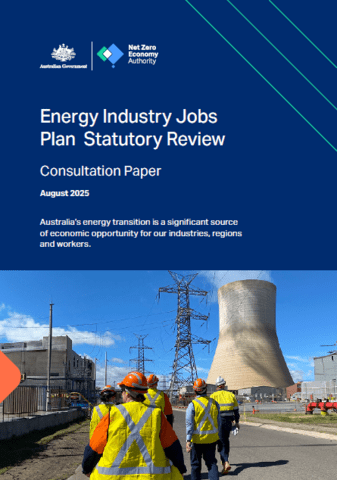
Energy Industry Jobs Plan statutory review
The Energy Industry Jobs Plan (EIJP) was established to support employees impacted by the closure of coal-fired and gas-fired power stations to prepare for, and transition to, new employment opportunities. This consultation paper has been developed to support a consultation process for the statutory review of the EIJP.
Report
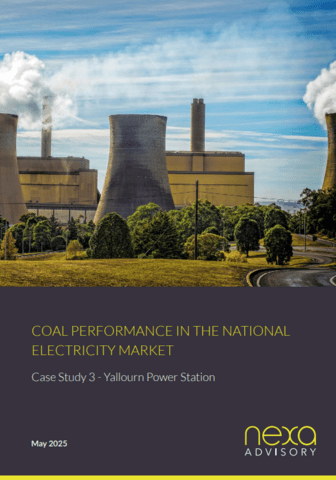
Coal performance in the national electricity market
This report analyses the performance of the Yallourn Power Station in Victoria between 2012 to 2024 as part of a series that examines the reliability and performance of coal-fired power stations across the National Electricity Market (NEM). It provides five recommendations, including a commitment to the on-time closure of Yallourn in 2028.
Article
Hazelwood's closure won't affect power prices as much as you might think
The ongoing uncertainty over the future of the Hazelwood power station in Victoria’s Latrobe Valley has raised the prospect that the ageing generator will be shut down in the near future. The power station has a nameplate capacity of 1.6 gigawatts, which represents 22% of the coal-fired generation capacity in Victoria, and 6% of the...
Report
Life after coal: pathways to a just and sustainable transition for the Latrobe Valley
The Latrobe Valley has a proud history of supplying the electricity that powers Victoria. But coalburning power stations are ageing and – responding to climate change – the world is moving rapidly to cleaner energy sources. In this shifting context, the Latrobe Valley faces inevitable change. The question is: how will that change be managed?