

Urban resilience
Alternative labels
City resilience
Strategy
Resilient El Paso
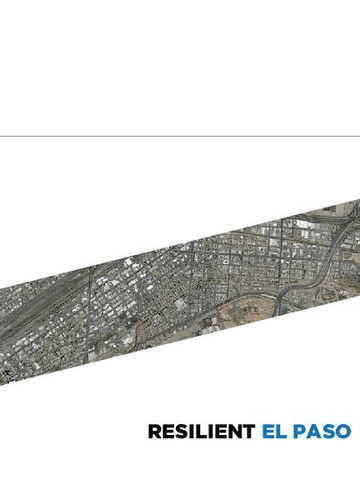
El Paso represents one half of the largest binational metroplex in the Western Hemisphere. It's regional population is expected to exceed 3 million by 2030. This strategy looks at how the city can move beyond simple survival by intelligently adapting to the changing world.
Journal article
Are some forms of resilience more sustainable than others?
Cities currently host more than half of the world population, a number which is projected to continue to rise. Urban centres also create large percentages of national gross domestic product (GDP) and are important sources of employment but also generate large proportions of national greenhouse gas emissions. Climate change and fast technological progress, among other...
Conference paper
The untapped potential of information flows for long-term urban resilience policy
Recent decades have seen urban resilience becoming a more popular term internationally both within academic and policy circles. However, relatively little attention has been paid by the literature to the policy implications of striving towards more resilient urban systems and the challenges introduced by the complex, multi-level and multi-actor policy network that forms their context.
Conference paper
Urban sustainable resilience values: driving resilience policy that endures
Countries across the globe are likely to face significant challenges in coming years that will test the resilience of their cities. However, there is often a lack of proactive evidence-based analysis of available options and their outcomes as well as indicators of success or progress. Without such analysis it is difficult to clearly gauge progress...
Conference paper
Resilient cities and lost opportunities: the case of transport funding in New Zealand
This paper uses the example of New Zealand’s national transport funding policy and allocation processes to demonstrate how an unreflective use of the term resilience results in lost opportunities to pursue a low carbon future, and works against the concept of resilience itself.