

Briefing paper
Briefing paper
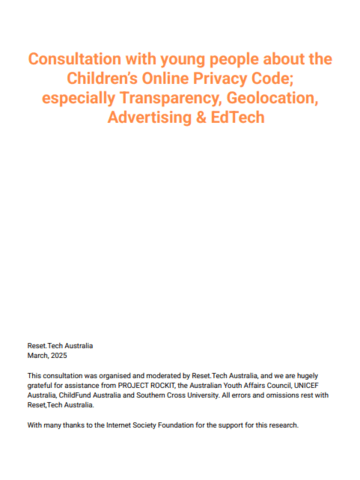
Consultation with young people about the Children’s Online Privacy Code
This paper presents insights from a youth workshop exploring online privacy, with a focus on transparency, geolocation tracking, targeted advertising, and educational technologies. It highlights key concerns and priorities voiced by young people to guide more inclusive and responsive privacy policy.
Briefing paper
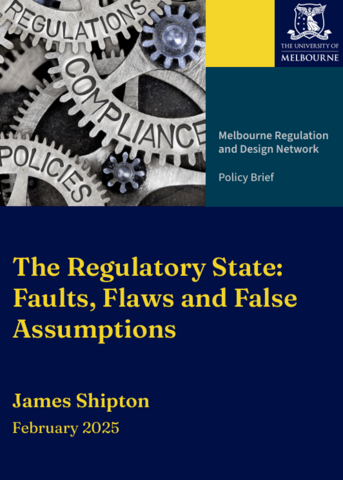
The regulatory state: faults, flaws and false assumptions
This paper identifies 12 systemic flaws and false assumptions that result in unreconcilable expectations for regulators and undermines their credibility and operational effectiveness. These flaws include lack of role clarity, accountability issues and under-resourcing.
Briefing paper
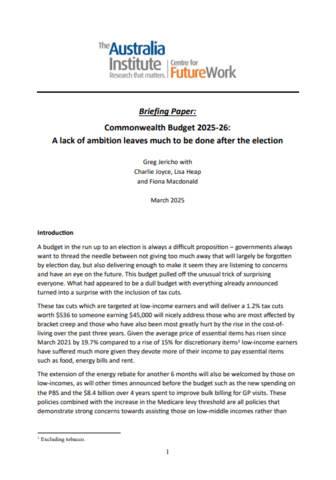
Commonwealth budget 2025-26: a lack of ambition leaves much to be done after the election
An analysis of the Commonwealth Government’s 2025-26 budget that focuses on the aspects targeting and impacting on workers, working lives and labour markets. The paper finds the budget is characterised by the absence of any significant initiatives, although the surprise tax cuts are welcome.
Briefing paper
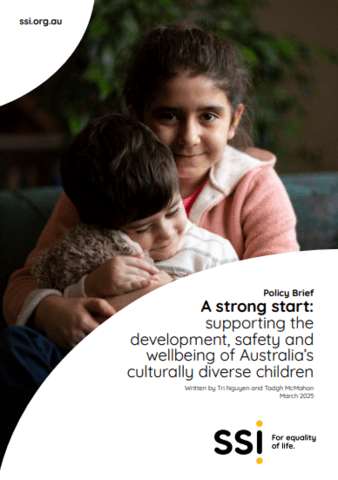
A strong start: supporting the development, safety and wellbeing of Australia's culturally diverse children
This policy brief argues for a stronger focus on responding to multicultural children with research, policy and practice not keeping pace with Australia’s increasing ethnic, linguistic and cultural diversity. Multicultural children are less likely to access early childhood education and this paper makes the case for a mix of targeted and place-based interventions. It provides...

Briefing paper
Delivering tangible population-based outcomes via an alliance model: South West Primary Health Care Alliance Queensland
Implementing an alliance governance framework in health care defines how partners collaborate, communicate, co-commission and co-ordinate mutually agreed goals and outputs. Principles which enable this include trust and commitment among the partners, flexibility and valuing each partner’s organisational reality. This evidence brief reports on the successful implementation of this approach in primary health care in...