

Briefing paper
Briefing paper
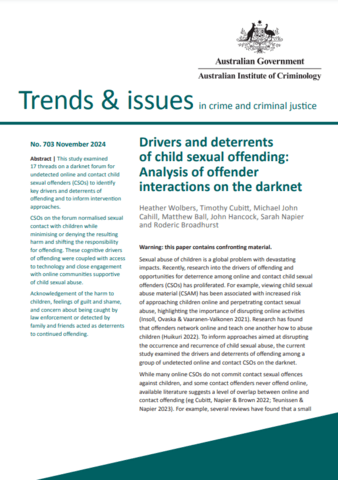
Drivers and deterrents of child sexual offending: analysis of offender interactions on the darknet
This study seeks to understand the drivers and deterrents of child sexual offending by analysing posts on a darknet forum frequented by self-identified paedophiles. The findings highlight the role of technology in avoiding detection, and the authors call on law enforcement to disrupt technology-mediated discussion among offenders.
Briefing paper
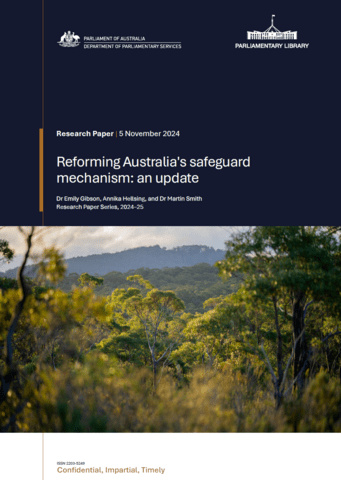
Reforming Australia's safeguard mechanism: an update
The safeguard mechanism is a central component of Australia’s climate change policy. It was reformed in 2023 to change several elements of the scheme. This paper provides an overview of the safeguard mechanism as it currently operates.
Briefing paper
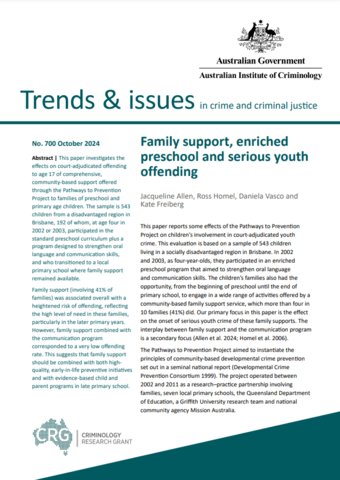
Family support, enriched preschool and serious youth offending
This paper examines the effects of family support and an enriched preschool program on serious youth offending. It finds that family support alone was associated with a higher risk of offending, but that family support in combination with early intervention programs correlated with very low offending rates. The research suggests that the benefits of family...
Briefing paper
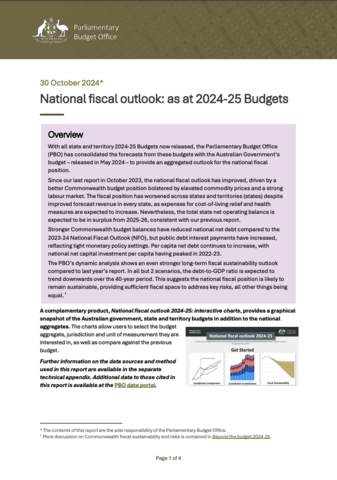
National fiscal outlook: as at 2024-25 Budgets
An overview of the Australian national fiscal outlook, consolidating forecasts from state and territory budgets with the Australian Government’s budget. Although the fiscal position has worsened across states and territories, the overall outlook has improved, suggesting long-term fiscal sustainability.

Briefing paper
An experimental study of support for protest causes and tactics and the influence of conspiratorial beliefs
A study of community attitudes towards protest in Australia, focusing on the influence of protest tactics and the interaction with belief in conspiracy theories. The study found that support for protest was influenced by both the cause and the tactics used, with peaceful protests significantly more supported than disruptive or violent protests.