

Australia
Report
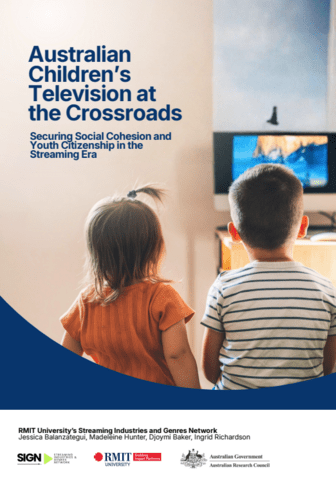
Australian children's television at the crossroads
This report charts how Australian children's television is navigating a profound cultural and industrial crisis. The sector tasked with producing valuable local screen content is experiencing systemic market failure and contraction. The report delivers an evidence-based policy and industry analysis. It exposes key structural vulnerabilities in the current childrenʼs screen sector.

Report
Children and young people roundtable summary report
This report describes discussions at a roundtable bringing children and young people with lived and living experience of domestic, family and sexual violence together with relevant Australian Government ministers. The report emphasises it's time to move beyond listening and start taking action based on what children and young people are saying needs to change.
Report
Extreme weather impacts: research report exploring the impacts of extreme weather events on frontline staff across care and community services
As climate risks intensify, there is a growing need to understand how extreme weather events are affecting frontline workers. This report outlines survey findings of Australian frontline staff, conducted between January and February 2026. It finds that the vast majority of frontline staff across care and community services are being impacted by extreme weather events.
Submission
Submission on the National Disability Insurance Scheme Amendment (Securing the NDIS for Future Generations) Bill 2026
This submission highlights concerns that without due consideration of the complex nature of psychosocial disability, the proposed changes to the NDIS may reinforce inequities in access, increase unmet need and shift demand to acute, intensive and costly parts of the broader mental health system.
Report
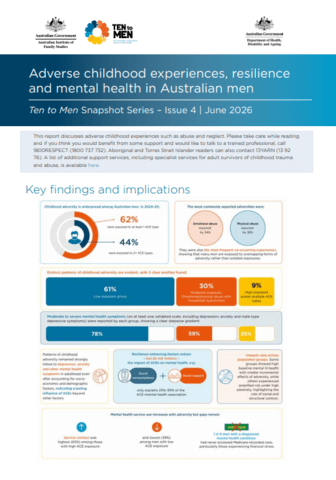
Adverse childhood experiences, resilience and mental health in Australian men
This research snapshot explores how childhood adversity is linked to adult mental health among Australian men, highlighting patterns of adversity, resilience, and implications for policy and practice. The findings highlight the urgent need for population-based approaches to preventing adverse childhood experiences to be a core component of the primary prevention of mental ill-health in adulthood.