

New South Wales
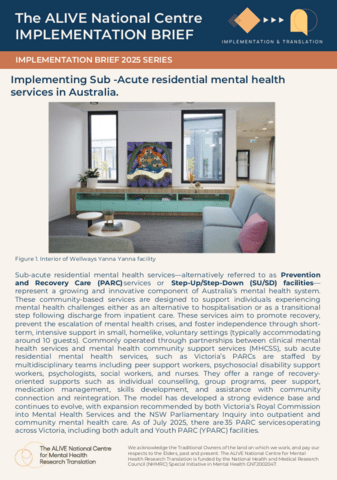
Briefing paper
Implementing sub-acute residential mental health services in Australia
This brief examines sub-acute residential mental health services as a growing and evidence-based component of Australia's mental health system. It summarises Australian and international research evidence on service effectiveness, consumer and carer experiences, scalability modelling, and implementation challenges.
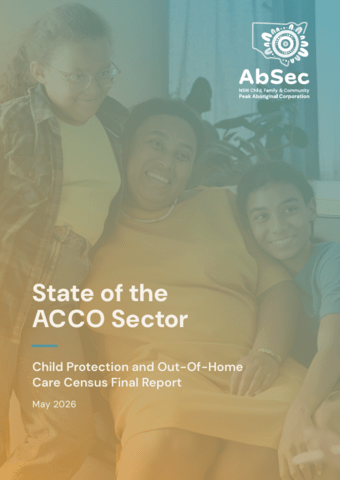
Report
State of the ACCO sector: child protection and out-of-home care census final report
Aboriginal Community-Controlled Organisations (ACCOs) provide holistic, culturally responsive care for Aboriginal and Torres Strait Islander children and families in New South Wales and yet are under-resourced and excluded from decision making. This report calls for reforms to strengthen the role of ACCOs in the child protection system.

Report
Domestic and family violence experienced by children and young people in NSW
Children and young people are more than witnesses to domestic and family violence (DFV); they experience DFV and its impacts directly. This paper considers progress in embedding the understanding of children and young people as victim-survivors of DFV within New South Wales policy and practice, looking at social services, education, justice and child protection.

Report
Early childhood education and care sector in New South Wales
This report provides an overview of the early childhood education and care sector in New South Wales, including issues relating to safety, quality, workforce, regulatory framework, data collection and the experiences of children with disability. The report finds the system is under strain and makes a range of recommendations for improvement.
Report
Alternatives to pre-trial detention
The report sets out alternatives to pre-trial detention for New South Wales centred on expanding structured bail supervision and developing community-based approaches to managing individuals outside of full-time custody. Drawing on successful models, the research shows these approaches can reduce pressure on the prison system and more effectively and efficiently deliver corrective services.