

Organisation
Climate Council
Alternate Name:
Climate Council of Australia
Website:

Report
Power shift: the US, China and the race to net zero
This report reveals that while the United States (US) President Donald Trump’s return to the White House is demolishing federal climate support, major US states, companies – and rivals such as China – are powering ahead with the switch to renewable energy. For Australia, the message is clear: its future prosperity depends on keeping pace.

Report
Stronger target, safer future: why Australia’s 2035 climate target matters
Under the Paris Agreement, nations are required to submit new 2035 targets to cut climate pollution. This report provides new, detailed analysis on a scientifically credible, Paris-aligned target for Australia. It finds that net zero by 2035 is the only target available to Australia with a strong chance of contributing to holding global warming below...
Report
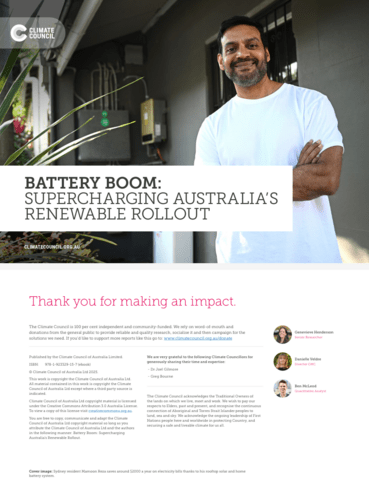
Battery boom: supercharging Australia’s renewable rollout
As costs rapidly fall and technologies improve, battery storage of all kinds is set to accelerate across Australia, with benefits from bill savings, further cuts to climate pollution and a more reliable grid. This report argues that with targeted policies, Australia can ramp up battery storage and make the most of this opportunity.
Briefing paper
Election 2025: unpacking the impact of climate and energy on Australian voters
This paper reviews the outcomes of the 2025 federal election, the major party positions and how the electorate voted on climate and energy policies. It finds that a steep swing towards the ALP represents a resounding endorsement of Australia’s current plan for renewable power.
Report
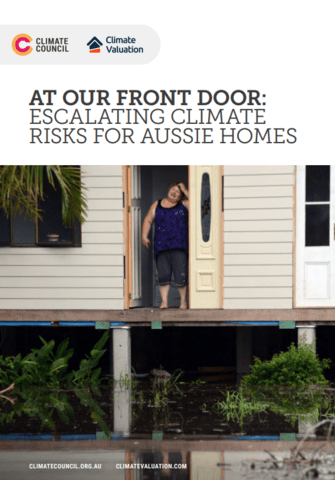
At our front door: escalating climate risks for Aussies homes
Climate change already threatens many people’s greatest asset, their home. This report identifies the suburbs and electorates across Australia where households and businesses face the most acute risk from climate-fuelled extreme weather events in 2025, and reveals the types of hazards that are driving this escalating risk.