


Discussion paper
Artificial intelligence and evidence-informed policy – emerging challenges and opportunities: discussion paper
This discussion paper examines the intersection of artificial intelligence (AI) and evidence-informed policymaking, outlining how AI can support problem identification, policy design and implementation. It emphasises that AI augments rather than replaces human judgement, while highlighting its potential to expand the evidence base and support more timely, responsive decision-making in complex health contexts.

Report
Co-designing a Living Evidence Architecture
This report presents findings from the Living Evidence Architecture (LEA) project which set out to explore how living evidence systems can better support decision-making across diverse health contexts. The findings from the research paint a picture of living evidence as a catalyst for change technologically, politically and socially.
Report
Global antibiotic resistance surveillance report 2025: summary
Antimicrobial resistance (AMR) is a growing threat to global health. This document is an executive summary of a World Health Organization report which presents a global analysis of antibiotic resistance prevalence and trends. It reviews progress in building global and national AMR surveillance systems, and proposes priorities for action to strengthen these systems.
Report
Global status report on neurology
Neurological conditions affect over 1 in 3 people worldwide. This report on neurology presents the first comprehensive global assessment of the public health response to neurological disorders under the Intersectoral Global Action Plan on epilepsy and other neurological disorders (IGAP). The report offers recommendations for policymakers, IGAP partners and the global neurology community.
Report
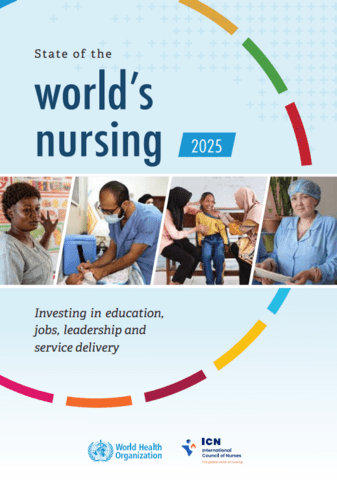
State of the world's nursing report 2025
The report provides a comprehensive and up-to-date analysis of the global nursing workforce. It calls on policymakers, associations, regulators, development partners, partner organisations and other stakeholders to utilise the report for policy dialogue and decision making on how and where to strengthen nursing to achieve universal health coverage. It identifies 17 policy priorities.