

Report
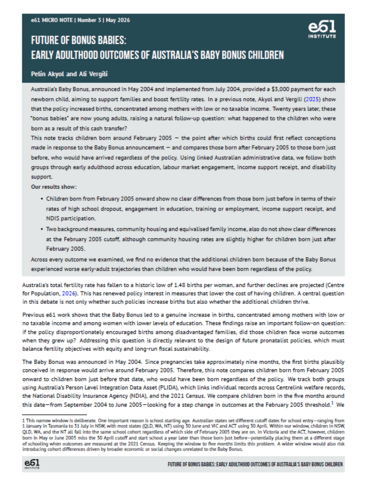
Future of bonus babies: early adulthood outcomes of Australia’s Baby Bonus children
Australia’s Baby Bonus, implemented from July 2004, provided a $3,000 payment for each newborn child, aiming to support families and boost fertility rates. Twenty years later, this paper explores whether the Baby Bonus shifted the course of these young people’s lives in a measurable way.
Report
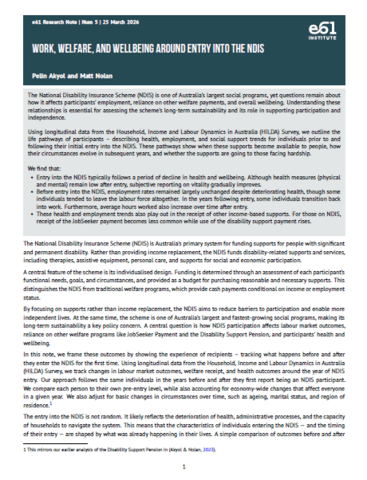
Work, welfare and wellbeing around entry into the NDIS
The National Disability Insurance Scheme (NDIS) is one of Australia’s largest social programs, yet questions remain about how it affects participants’ employment, reliance on other welfare payments, and overall wellbeing. Understanding these relationships is essential for assessing the scheme’s long-term sustainability and its role in supporting participation and independence.

Report
Understanding the role of price caps in NDIS markets
Price caps are a core regulatory tool of the National Disability Insurance Scheme (NDIS). This paper examines how market prices and service volumes responded to the July 2025 NDIS price caps adjustments. The results suggest that price cap adjustments affect both expenditure and service provision, highlighting a trade-off that warrants ongoing monitoring of provider behaviour.
Briefing paper
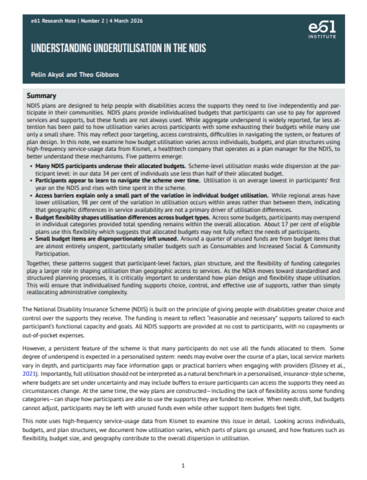
Understanding underutilisation in the NDIS
National Disability Insurance Scheme (NDIS) plans are designed to help people with disabilities access the supports they need to live independently and participate in their communities. NDIS plans provide individualised budgets that participants can use to pay for approved services and supports. This note examines how budget utilisation varies across individuals, budgets and plan structures.
Report
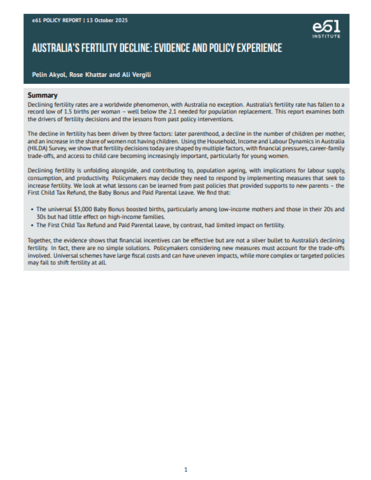
Australia's fertility decline: evidence and policy experience
Declining fertility rates are a worldwide phenomenon, with Australia no exception. Australia’s fertility rate has fallen to a record low of 1.5 births per woman. This report examines both the drivers of fertility decisions and the lessons from past policy interventions. It finds the decline in fertility has been driven by three factors.