

Sustainable building
Alternative labels
Sustainable construction
Sustainable building design
Sustainable building construction
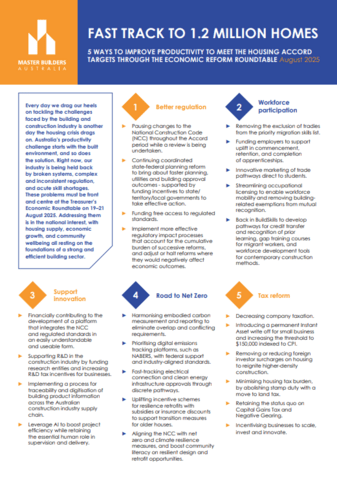
Briefing paper
Fast track to 1.2 million homes
The upcoming Australian Government's Economic Reform Roundtable is a significant opportunity to address the barriers holding back the building and construction industry, and with it, Australia’s housing supply. The industry is constrained by outdated systems, inconsistent regulation and severe skill shortages. This paper outlines the reforms the industry believes are essential.
Report
Climate resilience
The impact of a changing climate on Victoria’s built environment is clear. This final report of an inquiry into climate resilience in Victoria considered the main risks facing Victoria’s built environment and infrastructure, how the Victorian Government is preparing for and mitigating these impacts of climate change, the barriers faced and what more could be...
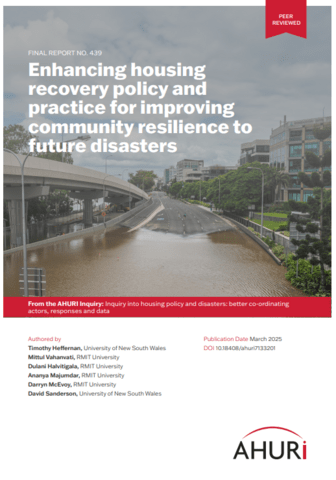
Report
Enhancing housing recovery policy and practice for improving community resilience to future disasters
The threat to housing in Australia from hazards such as bushfires, floods and cyclones is increasing, with replacement costs escalating. This report explores the housing policies that can improve community preparedness and responses to disasters. It presents several opportunities for policy development and practice change. Build back better approaches need to become the norm in...

Report
Building materials in a circular economy
Understanding the structure of building-material supply chains is essential for policy development seeking to reduce carbon intensity of new material choice and use in the housing industry. This research analyses the supply chains and regulatory settings applicable to manufactured building materials used by the residential housing industry to assist the housing industry in reducing greenhouse...

Report
Delivering sustainable apartment housing: new build and retrofit
This research investigates how Australia can supply new and retrofit older apartments so that they are sustainable - that is, they are comfortable; deliver cost reductions for householders, while minimising consumption and waste; and maximise energy efficiencies and energy management, both in their construction and throughout their lifecycle.