

Service integration
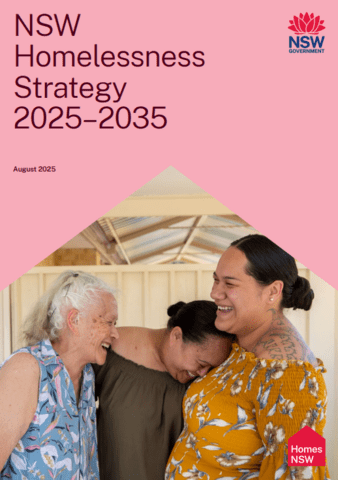
Strategy
NSW homelessness strategy 2025–2035
A 10-year whole-of-government plan for New South Wales to make homelessness rare, brief and not repeated because people have a safe home and the support to keep it. The strategy outlines a coordinated approach to homelessness reform across government, the homelessness and housing sectors, local services and communities.
Report
MCM’s Victorian youth homelessness snapshot 2025
The snapshot represents, on a given day in 2025, the reality faced by young people accessing MCM’s homelessness programs in Victoria, Australia. The data confirms that young people experiencing homelessness are navigating a system that is fragmented and reactive, not proactive or preventive. It confirms the urgent and growing need for early intervention, housing and...
Strategy
Strategy to prevent and minimise gambling harm 2025/26 to 2027/28
This strategy sets out New Zealand’s approach to funding and coordinating services to prevent and minimise gambling harm. It strengthens alignment with mental health priorities by providing additional funding to improve access to services and treatment, focus on prevention and early intervention, and enable more effective service support.
Report
The Orange Door: follow-up
Family violence remains a significant social and public policy issue in Victoria and demand for family violence services continues to increase. This report assesses the implementation of recommended improvements to family violence support services. It finds four of nine recommended improvements have been completed and identifies further work still to be undertaken.
Journal article
Considering the need for congruence in Closing the Gap, target 10: reducing high rates of adult Aboriginal incarceration
This article examines congruence between federal, state and local initiatives to reduce Aboriginal incarceration through the lens of a place-based regional service. The article determines that the multi-level efforts are not intersecting. It recommends improving agreement in communication to increase the likelihood of achieving the desired outcomes of reduced Aboriginal incarceration rates in regional settings.