

Consumer behaviour
Alternative labels
Consumer engagement
Consumer expectation
Report
Digital lives of Australians 2026
The report presents how Australians use, trust and navigate the internet in 2026. The research involved Australian adults and small business owners and managers. It highlights that the internet is undoubtedly essential infrastructure, much like water and electricity. However, with increased reliance on the internet also comes challenges and new opportunities.
Report
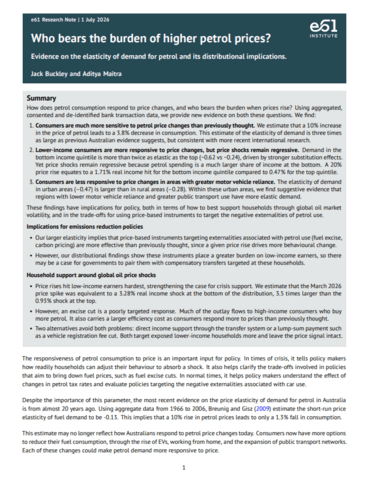
Who bears the burden of higher petrol prices?
Understanding how petrol consumption responds to price changes and who bears the burden when prices rise is critical to both designing relief measures in times of volatility as well as setting petrol tax rates in normal times. This research provides evidence on how petrol consumption responds to price changes and how it varies across households.
Survey Report
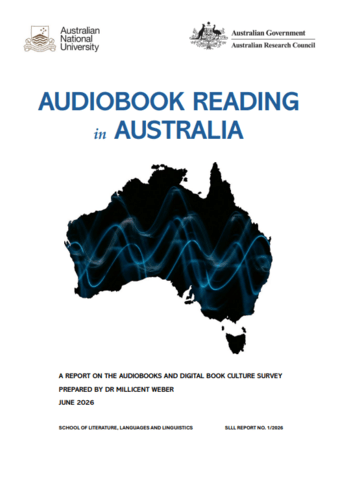
Audiobook reading in Australia
One of the biggest developments in book culture in the 21st century has been the rise of audiobooks. Based on a survey of Australian audiobook consumption in October 2025, this report provides a sense of the shape, size and significance of audiobook reading in Australia, both as a market and as a distinctive community.
Report
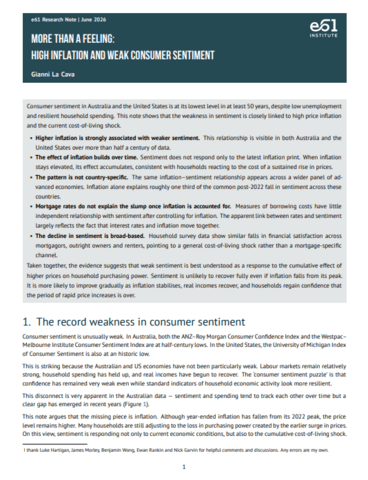
More than a feeling: high inflation and weak consumer sentiment
This research links the decline in consumer sentiment in Australia to the cumulative, broad-based impact of high inflation on consumer purchasing power. The evidence suggests it is the persistent price pressures, rather than mortgage rates which are driving the pessimism across all household types, suggesting a return to confidence depends on inflation easing back.
Report
Digital addiction: evidence and policy implications
This research finds evidence that digital addiction drives about one-third of social media use. It finds that many people use more social media than they would like, placing digital media alongside other addictive goods. The paper concludes that policymakers should consider interventions that would help users act in accordance with their own long-run preferences.