

Intergenerational equity
Alternative labels
Intergenerational sustainability
Briefing paper
The rising isolation of the island nation: five economic themes that will dominate the next parliament
This paper highlights five economic themes emerging from the shifting global order and likely to shape Australia's policy debate in the coming years. It aims to assist policymakers as they adapt to the new global order and tackle domestic pressures by framing the big policy challenges and identifying where policy needs to adapt.

Discussion paper
Tax green paper
This paper seeks to initiate discussion about the purpose and principles of the tax system by exploring potential avenues for reform. It proposes six priorities intended to lower income taxes on working people, restore intergenerational equity and improve business productivity.
Briefing paper
For our future: the Australian future generations policy brief
This policy brief responds to increasing demand for a future generations policy with an overview of measures and models that prioritise intergenerational equity. It proposes enacting a Future Generations Act, establishing an independent Commissioner for Future Generations and initiating a national conversation to ensure that current policies consider future wellbeing.
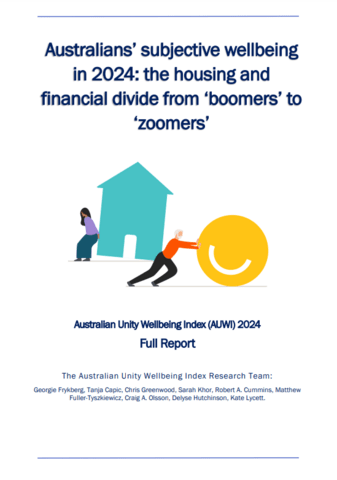
Report
Australians’ subjective wellbeing in 2024: the housing and financial divide from ‘boomers’ to ‘zoomers’
The Australian Unity Wellbeing Index monitors the subjective wellbeing of over 2,000 Australian adults. This year’s results show Australian's satisfaction with life has hit an all-time low. Satisfaction with health also slumped to an unprecedented low. Personal wellbeing scores and satisfaction with life “as a whole” both continue to remain very low.

Report
‘We’ve been robbed’: young women and gender diverse people’s housing experiences and solutions
In this study, a generational, gendered, and intersectional approach is used to investigate the lived experience of housing insecurity, homelessness risk and homelessness experienced by a diverse range of young women and young gender diverse people aged 18 to 30 years. It provides recommendations to address the inequities in access to housing that are generational...