

Disadvantaged students
Report
Evidence-based pedagogies to support online engagement of low SES, and regional, rural, and remote students
Online learning has increased significantly. Using Tasmanian data, this report outlines how a lack of pedagogical support for students studying online disproportionately impacts on students from disadvantaged backgrounds, including lower course completion rates and a reduced sense of place and belonging. It provides recommendations aimed at teachers, university leaderships and policymakers.
Literature review
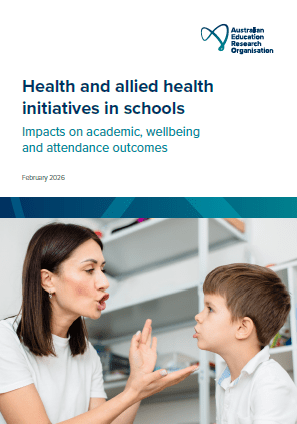
Health and allied health initiatives in schools
This report presents findings from a review examining the role of school-based health and allied health initiatives in Australia. It provides policymakers with insights into how these initiatives impact student outcomes. The review found evidence that some school-based programs, when delivered effectively and in a way that supports learning, are associated with improved outcomes.
Journal article
Pathways to adolescent executive function in Australian Aboriginal and Torres Strait Islander children
This article describes research into adolescent executive functioning in Australian Indigenous children, examining the role of early home and learning environments and key developmental skills. Longitudinal data indicates preschool visual motor and literacy skills and early school classroom self-regulation predict adolescent executive function. Policy responses for family and early learning services are suggested.
Report
Time for a rethink: assessment policy to enable equity
This study examines how assessment policies and practices around time are creating barriers for university students from equity groups. Four key recommendations and examples of high‑equity practices are provided to help universities shift away from individualised notions of “time management,” streamline adjustment processes and adopt more inclusive assessment designs that address systemic time inequities.
Report
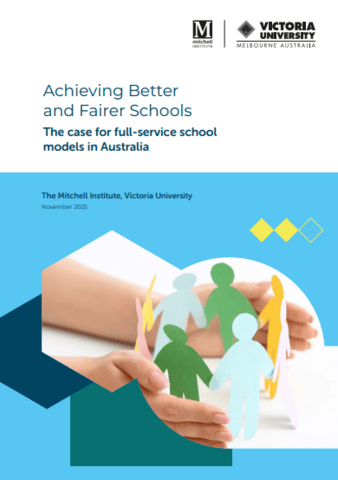
Achieving better and fairer schools: the case for full-service school models in Australia
Australian education data shows inequality begins early and deepens over time. According to this report, a potential solution is the establishment of full-service schools in areas where they are needed most. A full-service school model means taking a wraparound approach to providing the health and wellbeing supports disadvantaged students may need.