

Public trust
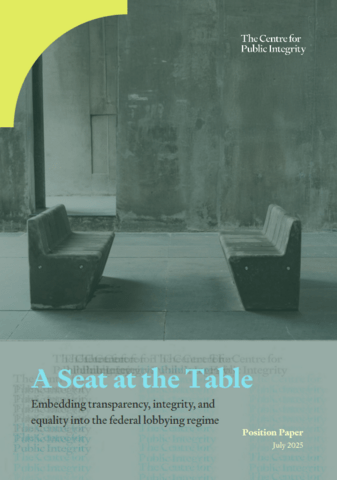
Position paper
A seat at the table: embedding transparency, integrity, and equality into the federal lobbying regime
This paper examines the central shortcomings of the Australian regime for regulating lobbying and proposes comprehensive reform to address them. It calls on the federal government to work towards re-building trust with the public by prioritising transparency, integrity and equality in lobbying. The paper proposes comprehensive legislative reform is urgently recommended. It provides 15 recommendations.
Report
Government at a glance 2025
This report provides a comprehensive overview of government activities and performance, including Australia. It presents the latest available data on government finances, employment, institutions, budgeting practices, risk management and citizen satisfaction. It outlines three key areas where governments can work to strengthen public trust and promote prosperity, offering evidence-based tools to tackle long-term challenges.
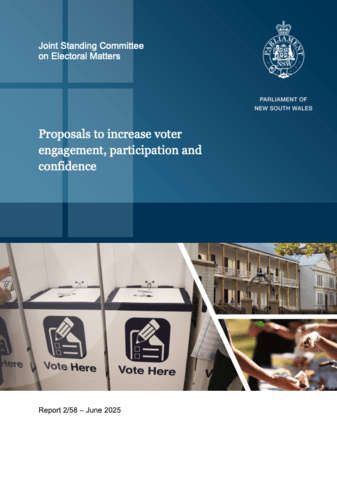
Report
Proposals to increase voter engagement, participation and confidence
A report from an inquiry into proposals to increase voter engagement, participation and confidence in New South Wales. It presents three findings and provides 22 recommendations. The recommendations cover a variety of matters ranging from civics education, voting information, technology-assisted voting and electoral funding laws.
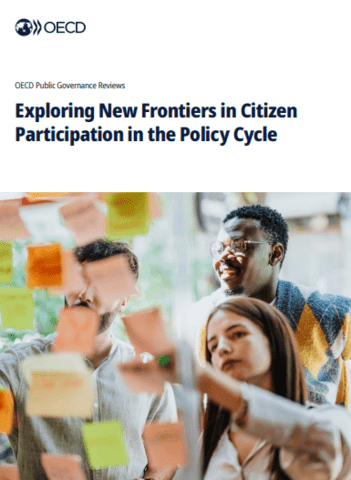
Report
Exploring new frontiers in citizen participation in the policy cycle
Meaningful citizen participation in policymaking is critical. This report identifies systemic challenges for citizen participation facing citizens, elected representatives, civil servants and civil society. It advocates for a strategic and targeted approach to citizen participation; lowering barriers to enable more inclusive participation; building capacity among both civil servants and citizens; and ensuring impact and accountability.

Report
Corporate influence in competition policymaking
This report focuses on corporate influence in competition policy, highlighting the benefits of legitimate corporate engagement, the risks when influence becomes undue and the challenges in distinguishing between the two. It outlines responses available to policymakers to help them minimise the risk of undue influence including transparency frameworks, prohibition policies and institutional integrity responses.