

Creative arts education
Report
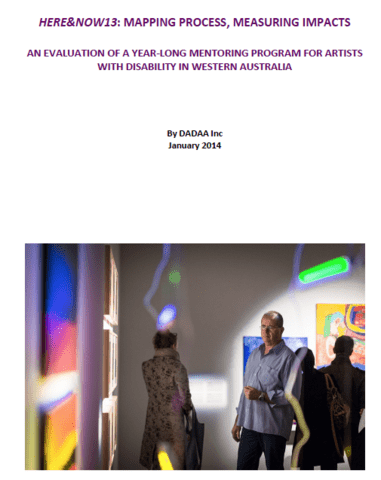
HERE&NOW13: mapping process, measuring impacts
This report captures the evaluation approach and results from a year-long multi-partnered project and exhibition, called HERE&NOW13, aimed at developing artistic skills and enhancing the social inclusion of artists with disability in efforts to elevate contemporary disability arts practice in Western Australia.
Conference paper
The wicked muse: Partnering creative practice, local communities and sustainability
Through this paper I propose that the ‘Muse’ is an important part of this ‘wicked’ conversation and can infuse the process with culturally rich meaning that enables communities to construct more sustainable cultures of living. Creative practices – from art, design, craft, writing, music and other forms of cultural production – can play an important...
Report
Second Life: how may it augment our first (learning) life?
This report on Second Life is structured in five parts. Part 1 gives a short outline of what Second Life is. Part 2 details current and potential use of Second Life in pedagogy. Part 3 addresses Second Life in relation to research and creative practice. Part 4 examines Second Life’s current and potential uses in...
Report
The contours of inclusion: frameworks and tools for evaluating arts in education
This publication is an edited collection of invited essays by presenters and panelists at a symposium of the same name which highlighted the growing body of evaluation and research from the general arts education field. They also featured specific work that relates to students with disabilities. In this compilation contributors share evaluation strategies and data...
Report
First we see: the national review of visual education
This is the report of a two-year review of Australia's visual education that examined existing programs and good practice from across the education system and outlined a framework for the future of visual education and four key recommendations. The four key recommendations of the review are: