

Pandemics
Report
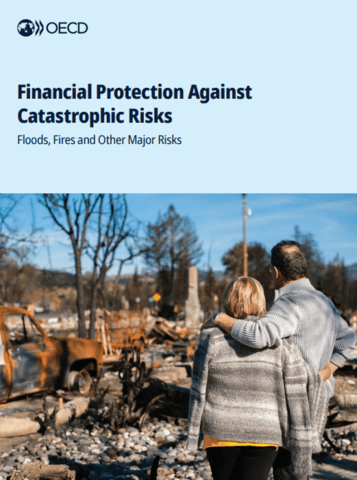
Financial protection against catastrophic risks
This report aims to help governments strengthen financial resilience against catastrophic risks. It provides a framework to assess the need for government-supported financial protection and the advantages and disadvantages of the main approaches to offering such support. It applies this framework to three types of large-scale risks: natural hazards, infectious disease outbreaks and cyber-attacks and...

Report
Productivity before and after COVID-19
This paper examines the rapid rise, and subsequent rapid decline, in labour productivity over the COVID-19 pandemic. It finds Australia’s productivity performance during the pandemic presents no clear long-term implications. This further emphasises the need to address Australia’s long-run productivity problem.
Report
Building national preparedness
Australia faces increasing threats from natural disasters, pandemics and geopolitical tensions, necessitating robust preparedness mechanisms. This report recommends a road map of immediate, near-term and longer-term initiatives that the Australian Government should embrace. The report outlines building an effective national preparedness system, and the capabilities and capacities needed for it, using Finland as an exemplar.
Journal article
Preparing Australia for future pandemics: strengthening trust, social capital and resilience
Trust in government and science have been shown to be important factors in crises. This article outlines the critical knowledge gaps in understanding the roles of trust, social capital and resilience in balancing future pandemic public health restrictions with disease transmission and mortality, and the key role these factors may play in future pandemic preparedness.
Working paper
Mistrust and missed shots: trust and COVID-19 vaccination decisions
This paper investigates the effect of interpersonal and institutional trust on COVID-19 vaccination hesitancy in New Zealand. The findings clearly show that higher trust correlates with lower vaccine hesitancy. By understanding how trust affects vaccine choices, it will be possible to build more effective public health campaigns in the future.