

Interpersonal relationships
Alternative labels
relationships
Interpersonal relations
Report
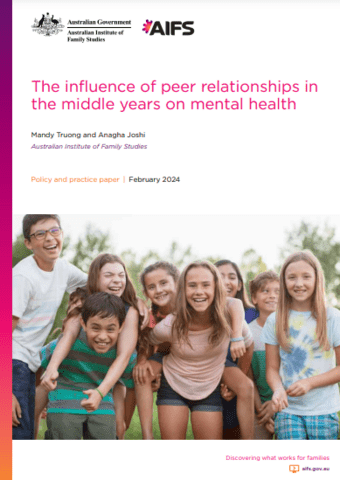
The influence of peer relationships in the middle years on mental health
This paper highlights the impact of positive peer relationships on the mental health, wellbeing and development of children aged 8-14. It also outlines how practitioners working with young people might support positive peer relationships.
Report
A social network analysis and implementation study of an intervention designed to advance social and emotional learning and respectful relationships in secondary schools
This project focused on the delivery of a modified version of the Resilience, Rights and Respectful Relationships education program with Year 7 and Year 9 students in six Victorian secondary schools over 2022.
Report
2023 Australian Youth Barometer: understanding young people in Australia today
The Australian Youth Barometer gauges the pressures currently experienced by young Australians. For this third edition of the Australian Youth Barometer, researchers surveyed over 500 young Australians aged 18 to 24, and interviewed another thirty, on a range of topics including the economy and work, education, health and wellbeing, relationships and civic participation.
Research Summary
Intimate partner violence among Australian 18–19 year olds
This snapshot examines risk and protective factors for intimate partner violence victimisation among Australian adolescents. The aim is to help policy-makers and service providers to identify populations that could be at increased risk, so that protective factors can be strengthened.

Report
Influencers and attitudes: how will the next generation understand domestic abuse?
The purpose of this research was to ensure an evidence base for the design of education about relationships for children and young people, highlighting the positive influence that well structured Relationships, Sex and Health Education (RSHE) programmes can have, and to ultimately investigate ‘what works well’.