

Coercive control
Briefing paper
Policy brief: reproductive coercion
Reproductive coercion and abuse (RCA) is a prevalent but under-recognised form of family, domestic and sexual violence. Although national strategies acknowledge RCA, this policy brief finds that responses across health, justice and community systems remain fragmented and inconsistent. It identifies five reforms to strengthen national responses to reproductive coercion and support safer reproductive decision-making.
Report
Yearly report to Parliament
This second yearly report to Parliament provides 30 recommendations for priority activities over the next 12 months to work towards achieving the outcomes of the National plan to end violence against women and children 2022-2032. The report contains case studies of work being done that we must learn from, share and scale to be able...
Briefing paper
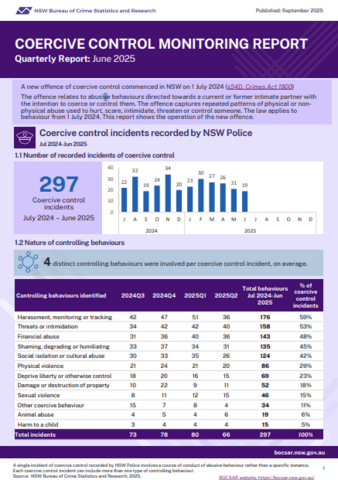
Coercive control monitoring report
Data on the first year of New South Wales (NSW) landmark coercive control legislation, which came into force on 1 July 2024. The legislation criminalises patterns of abusive behaviour in intimate partner relationships, marking a significant shift in how domestic abuse is recognised and addressed.
Report
Statutory review report: Crimes (Consent) Amendment Act 2022
This is a report of the statutory review of the operation of sections inserted into the Crimes Act 1900 in the Australian Capital Territory by the Crimes (Consent) Amendment Act 2022. The review aimed to determine whether these sections are clear and effective. It also examined whether the Amendment Act had any unintended consequences.
Report
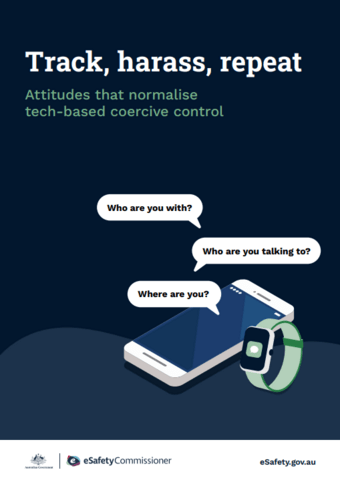
Track, harass, repeat: investigating attitudes that normalise tech-based coercive control
This summary report explores attitudes and expectations that could normalise the use of tech-based coercive control in relationships. It aims to understand the prevalence of certain harmful expectations and attitudes relating to tech-based surveillance and micro-management (often elements of tech-based coercive control) in intimate relationships.