

World politics
Alternative labels
Geopolitics
Strategy
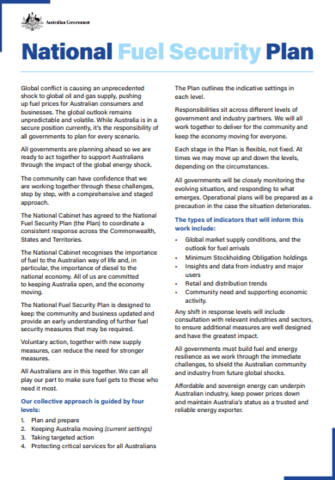
National fuel security plan
Global conflict is causing an unprecedented shock to global oil and gas supply. A national fuel security plan has been agreed to, to coordinate a consistent response across the Commonwealth, states and territories. The plan is designed to keep community and business updated and provide an early understanding of further fuel security measures that may...
Report
Markets as the new front line: fusing Australia’s economic statecraft
Episodes over the past decade demonstrate how economic levers are being used to impose costs and reshape incentives without crossing traditional thresholds of conflict. This report argues for strengthening the connective tissue between policy, intelligence, economic and security functions so that information flows more freely, preparedness is built collectively and joint capabilities can withstand pressure.
Briefing paper
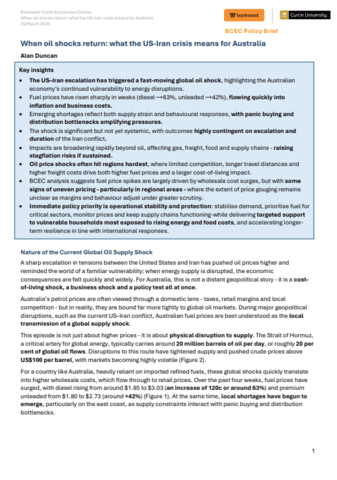
When oil shocks return: what the US-Iran crisis means for Australia
A sharp escalation in tensions between the United States and Iran has pushed oil prices higher. This policy briefing examines how the current shock compares to previous oil supply disruptions, and how this price shock can spread through Australia’s economy. It also provides early policy actions Australia can take to stabilise fuel supply and support...
Report
Sheltering from oil shocks
The conflict in the Middle East has created the largest supply disruption in the history of the global oil market. This report outlines demand-side measures available to governments, businesses and households that span road transport, air travel, cooking and industry amid strains in diesel, jet fuel and LPG markets. It outlines 10 immediate actions to...
Briefing paper
Fuel shock: why clean energy is our best defence
The escalating conflict in Iran and neighbouring countries is a significant risk to Australian households. When fossil fuel supply is threatened, prices spike and Australians pay. This is Australia’s core energy vulnerability. This paper proposes to reduce dependence by accelerating renewable energy and the electrification of homes, businesses and transport.