

First Nations children
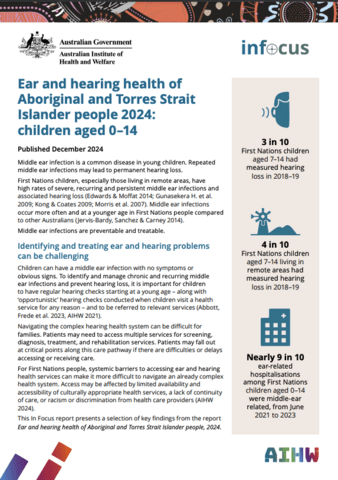
Briefing paper
Ear and hearing health of Aboriginal and Torres Strait Islander people 2024: children aged 0–14
This paper presents information on the ear and hearing health of First Nations children aged 0–14 and shows the rate of preventable hearing loss among First Nations children is decreasing but still well above national averages.
Report
Family Matters: report 2024
This report tracks progress towards ensuring Aboriginal and Torres Strait Islander children grow up safe, cared for and connected to their families, communities and culture. In particular, the report examines the over-representation and outcomes for Aboriginal and Torres Strait Islander children in child protection systems, finding Australia will fail to meet its 2031 Closing the...
Evaluation
Evaluation of the Australian Family Partnership Program (AFPP)
The Australian Family Partnership Program (AFPP) is a nurse-led home visiting program designed to improve health outcomes for First Nations families by supporting women pregnant with a First Nations baby from pregnancy through until their child is two years old. This report captures the outcomes of the program including the impact on the health and...
Evaluation
Early Years Programme: developmental evaluation report
This evaluation focussed on Health NZ’s Early Years Programme – particularly on the Community Innovation Fund (the Fund). The purpose of this evaluation was to provide Health NZ with insights and learnings to support the ongoing development of the program, based on what has been important and made a difference for those involved.
Report
State of child health in Aotearoa NZ
This report presents data and insights that demonstrate the worsening state and continued inequity of child health in New Zealand, and calls for concerted action that is grounded in robust evidence. The report shows that Māori children, Pasifika children, and children living in areas of socioeconomic deprivation are significantly disproportionately affected by key health concerns.