

Gender gap
Alternative labels
Gender pay gap
Report
Secure Jobs, Better Pay review: final report
The final report of the independent statutory review of the Fair Work Legislation Amendment (Secure Jobs, Better Pay) Act 2022 and Part 16A of Schedule 1 of the Fair Work Legislation Amendment (Closing Loopholes) Act 2023. It finds that the reforms are, on the whole, achieving the Australian Government’s intent. The report makes 21 recommendations.
Report
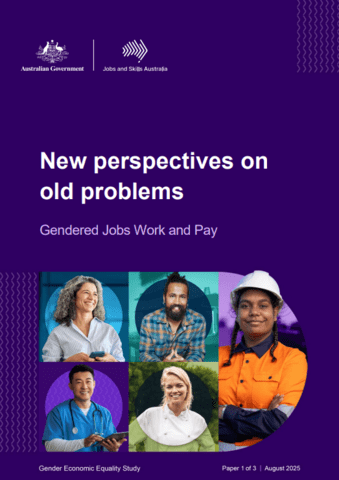
New perspectives on old problems: gendered jobs work and pay
The first in a three-part series on new perspectives on gender economic inequality, revealing how much gender shapes jobs, work and pay across Australia. The report highlights the scale of occupational segregation. It finds that despite more women participating in the workforce than ever before, men still earn more than women in 98% of occupations.
Briefing paper
Artificial Intelligence, gender and economic equality
This policy brief examines how the widespread adoption of artificial intelligence (AI) and large language models is amplifying risks to women’s economic equality in Australia. Drawing on recent evidence from employment, financial and housing sectors, this report provides gender-responsive recommendations for regulation and oversight. It offers targeted strategies to ensure that the benefits of AI...
Report
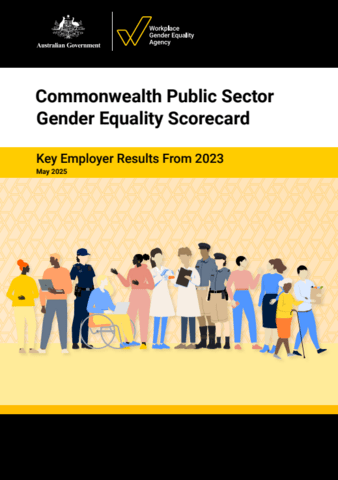
Commonwealth public sector gender equality scorecard
The scorecard presents the individual gender pay gaps for 120 Commonwealth public sector employers and two corporate groups. The report also contains analysis of the employer reports against each of the six gender equality indicators for 2023. The results indicate that Commonwealth public sector employers have lower gender pay gaps than their private sector counterparts.

Briefing paper
Women, innovation and productivity
This brief discusses how unlocking the full economic potential of women requires tackling systemic barriers – from biased workplace cultures and underinvestment to gender gaps in education, leadership and funding – through inclusive policies, early education reform and diversity-focused business incentives.