

Public service
Alternative labels
APS
Australian public service
Civil service
Guide
Define the problem
In policymaking, clearly defining the problem is essential to ensure effective solutions. A well-defined problem should outline the objective and guide the setup and direction, forming the foundation for successful policy development. This guide provides tools and tips on getting clarity around the problem you are trying to solve and how you will solve it.

Guide
Gender impact assessment toolkit
Gender impact assessments are a way of critically thinking about how policies, programs and services will meet the different needs of women, men and gender diverse people. The aim of gender impact assessments is to create better and fairer outcomes and ensure all people have equal access to opportunities and resources.
Working paper
Dynamic capabilities in the public sector: the case of the UK’s Government Digital Service
This study explores the concept of dynamic capabilities in the public sector. Using the UK’s Government Digital Service (GDS) as a case study, the authors demonstrate how such capabilities form and how they evolve over time.
Journal article
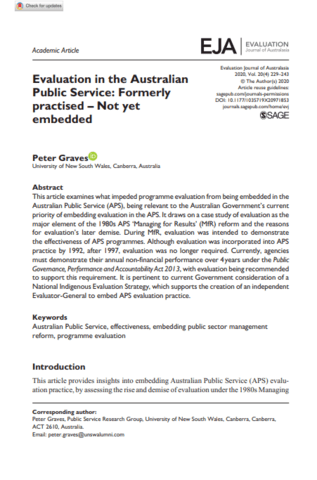
Evaluation in the Australian Public Service: formerly practised – not yet embedded
This article examines what impeded program evaluation from being embedded in the Australian Public Service (APS). It draws on a case study of evaluation as the major element of the 1980s APS ‘Managing for Results’ reform and the reasons for the later demise of evaluation. The article finishes by examining the value of an external...
Briefing paper
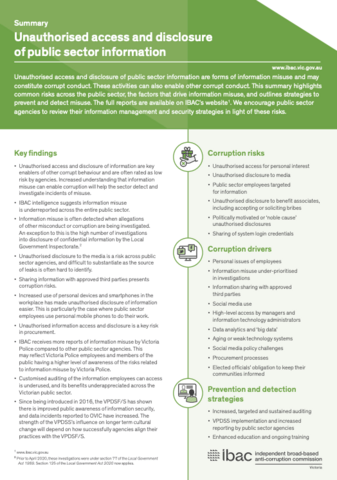
Unauthorised access and disclosure of public sector information: summary
Unauthorised access and disclosure of public sector information are forms of information misuse and may constitute corrupt conduct. These activities can also enable other corrupt conduct. This summary highlights common risks across the public sector, the factors that drive information misuse, and outlines strategies to prevent and detect misuse.