

Student welfare
Alternative labels
Student wellbeing
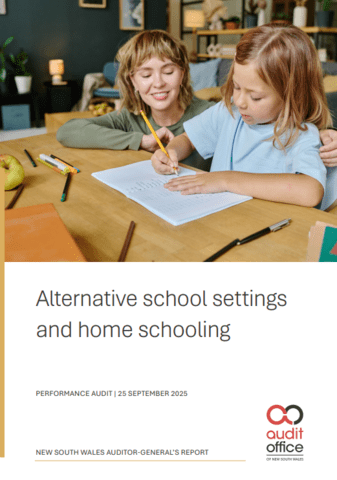
Report
Alternative school settings and home schooling
This audit assessed the performance of the NSW Education Standards Authority (NESA) and the NSW Department of Education in regulating home schooling and in providing alternative school settings, specifically: distance education schools, hospital schools, intensive learning support schools and youth justice centre schools. It makes three recommendations to the Department of Education.
Briefing paper
Policy brief: systemic policy responses to ‘whole-of-school’ wellbeing approaches
Supporting student wellbeing in schools has become an urgent priority as the youth mental health crisis continues to grow. This policy brief explores the current literature supporting a ‘whole-of-school’ approach to wellbeing and presents policy recommendations aimed at driving meaningful, systemic change, recognising schools as key environments where mental health and wellbeing can be supported.
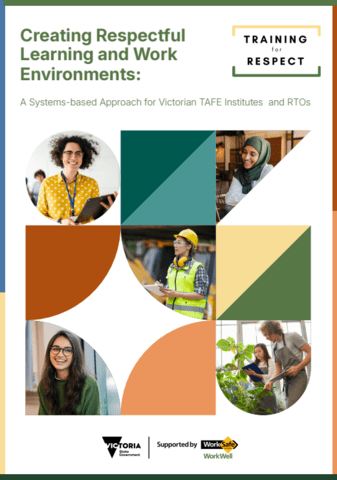
Strategy
Creating respectful learning and work environments
Workplace gendered violence is a serious and persistent issue in the vocational education and training (VET) sector. This Theory of Change sector-wide roadmap focuses specifically on addressing work-related gendered violence, including sexual harassment, in VET environments. It sets out actions to bring about change for the sector, industry networks and peak bodies, VET regulators and...
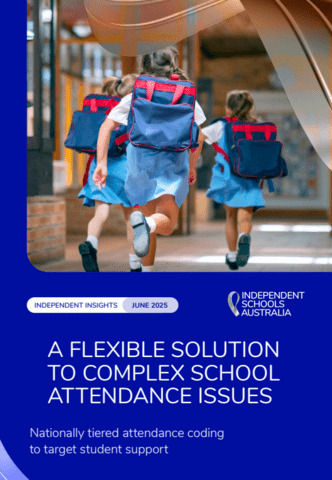
Report
A flexible solution to complex school attendance issues
This report examines the complexities of school non-attendance through a school refusal lens, exploring its multifaceted causes and the resulting impact on students, families and schools. The report highlights the need to differentiate types of absenteeism, and sets a clear and constructive path forward. It calls for urgent national action to tackle Australia’s growing school...
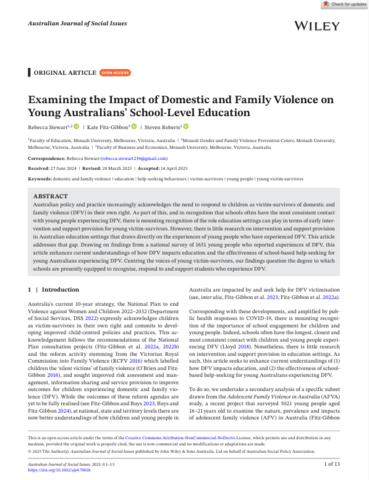
Journal article
Examining the impact of domestic and family violence on young Australians' school-level education
This article examines intervention and support provision in Australian education settings that draws directly on the experiences of young people who have experienced domestic and family violence (DFV). The findings question the degree to which schools are presently equipped to recognise, respond to and support students who experience DFV.