

Kinship care

Research Summary
What does ten years of the Pathways of Care Longitudinal Study (POCLS) data tell us about children and young people in out-of-home care in NSW?
This report summarises evidence from the last ten years of the Pathways of Care Longitudinal Study in Australia – a large-scale prospective longitudinal study of children and young people in out-of-home care. It provides a summary of key findings and identifies key implications for policy and practice.
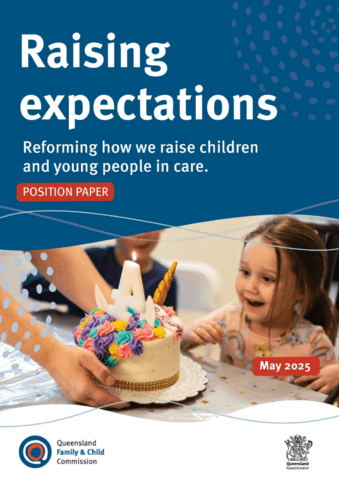
Position paper
Raising expectations: reforming how we raise children and young people in care
This is a synthesis report of the Queensland Family and Child Commission's (QFCC) submissions to three key Commonwealth reviews. The consultation papers developed to inform these reviews demonstrate that while progress has been made to modernise the structures to assist caregivers in the child protection system more work is needed to ensure the wellbeing of...
Systematic review
What interventions improve outcomes for kinship carers and children in their care
This review sought to understand the evidence of programmes and policies to improve the outcomes of kinship carers and the children in their care. The review also explored carer and practitioner perspectives on how interventions can best serve them. Programmes specifically designed for kinship families show promise in helping to improve the lives of kinship...
Report
Outcomes for children and young people in non-government organisations managed out-of-home care
This paper presents findings from the first large-scale prospective longitudinal study of children and young people in out-of-home care (OOHC) in Australia, comparing the socio-emotional outcomes of government- and non-government-managed care. It notes a range of factors that influence wellbeing but finds no evidence that the case management provider has a significant impact.
Report
Leaving care cohort (15-17 years) statistical report: experiences of young people who entered out-of-home care aged 4-14 years
This report focuses on a cohort of young people in out-of-home care (OOHC) who were aged 15-17 years at the time of their interview and describes the experiences of young people who entered OOHC when they were 4-14 years old. It focuses on the demographic characteristics, socio-emotional wellbeing, social competence, verbal ability, non-verbal reasoning and...