

Public policy implementation
Alternative labels
Service Implementation
Practice implementation
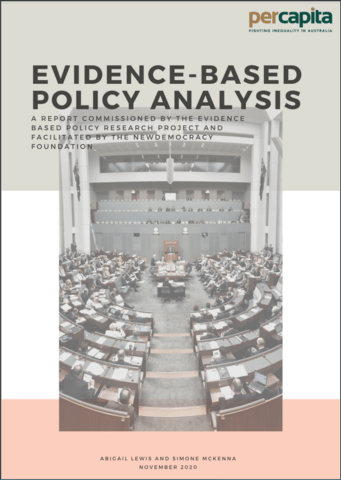
Report
Evidence-based policy analysis: 20 case studies 2020
Policies are often built ‘on the run’ as quick reactions to the political issue of the day, designed to capture the interest of the 24-hour news cycle or motivated by short-term political advantage. This report addresses the problem that policymaking in Australia is falling short of best practice.
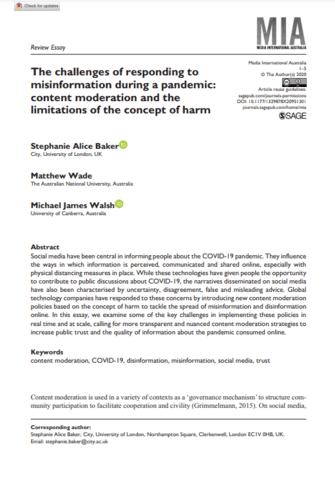
Journal article
The challenges of responding to misinformation during a pandemic
While social media have given people the opportunity to contribute to public discussions about COVID-19, the narratives have been characterised by uncertainty, disagreement, false and misleading advice. In this essay, the authors examine some of the key challenges in implementing content moderation policies in real time and at scale, calling for more transparent and nuanced...

Briefing paper
Does process matter? Experimental evidence that policy makers should advertise process as well as outcomes
This paper summarises the findings of a recent academic article published by the authors.

Policy report
Policy making in a digital world
Drawing on interviews with policy experts and digital specialists inside and outside government, this report argues that better use of data and new technologies, such as artificial intelligence, would improve policy makers’ understanding of problems like coronavirus and climate change, and aid collaboration with colleagues, external organisations and the public in seeking solutions to them.

Report
Prioritising a government’s agenda
This paper argues that Australian governments would be better at policy reform if they prioritised their agenda better. The report suggests that governments should look for the reforms that will make more of a difference while minimising the political cost. This means assessing both the value and feasibility of potential initiatives.