

Australia

Report
VET in schools 2024
The report provides data on vocational education and training (VET) undertaken by school students in Australia as part of their senior secondary certificate of education. It finds that the number of students participating in VET in schools in 2024 increased by 5.8%. Nationally, student numbers reached their highest level since the collection began in 2006.
Report
Co-design partnerships: a mutual exchange
The purpose of the project was to create clarity around what is needed for disability representative and carer organisations, disability advocacy organisations and other consumer-led and disability capacity strengthening organisations. To be able to be meaningfully involved in disability, involvement of these organisations is crucial across the research continuum.
Report
Parricide in Australia: findings from the National Homicide Monitoring Program
This study examines the characteristics of parricide in Australia using 35 years of data. Parricide, or the homicide of a parent by their child, comprises 5% of homicides each year. Findings illustrate the distinctiveness of parricide and the greater need to consider this form of lethal violence in responses to family violence.
Report
Heat, power and flexibility to future-proof Gladstone
Gladstone, in Central Queensland, is a key industrial hub producing essential heavy manufacturing goods such as aluminium, cement and chemicals. While vital to Australia’s economic development, Gladstone’s industries are currently emissions-intensive. This report focuses on two key opportunities for industrial decarbonisation in Gladstone: replacing fossil fuels used for industrial heat with low-carbon alternatives and energy...
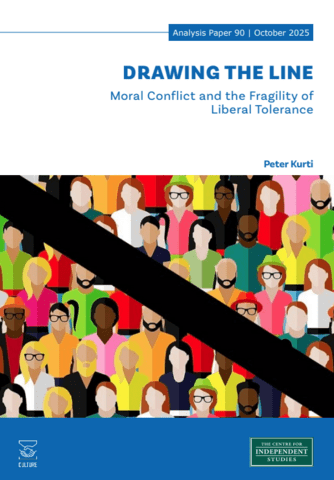
Report
Drawing the line: moral conflict and the fragility of liberal tolerance
This paper argues that Australia’s democratic institutions must learn to manage, rather than resolve, deep moral disagreement. It contends that conflict between legitimate but incompatible values is a permanent feature of free societies. The paper examines how liberal institutions can sustain a shared civic life in the face of deep ethical disagreement.