

Australia
Evaluation
Improving on-time submission rates for charity annual information statements: a randomised trial
This evaluation tested whether an extra email reminder could improve timely charity reporting. Involving 15,000 charities, the trial showed that sending a direct reminder to someone responsible increased on-time submissions from 56% to 62%. The approach worked across all charity types, proving simple nudges can boost compliance.
Report
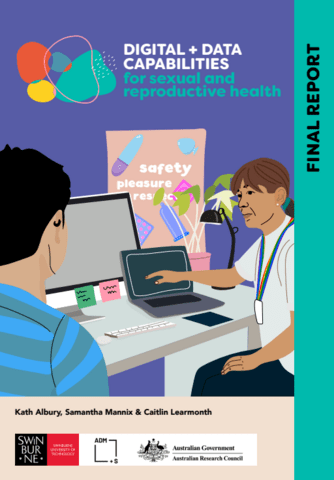
Digital and data capabilities for sexual and reproductive health: final report
Digital literacy has been framed as a necessity for sexual and reproductive health consumers who engage with healthcare via digital platforms. However, the question of what digital and data literacy looks like for current sexual and reproductive health practitioners remains under-addressed. This report presents findings from a 2022-2026 project which addresses these complex and interconnected...
Report
The impacts of CCTV on victim-survivors of domestic and family violence
In Australia, victim-survivors of domestic and family violence (DFV) are increasingly using closed-circuit television (CCTV) systems. This paper presents the findings from a world-first study into how victim survivors of DFV experience the use of CCTV systems. The findings demonstrate that CCTV can have beneficial impacts on the wellbeing of victim-survivors but also carries risks.
Report
How does the tax-transfer system replace income after job loss?
This paper investigates how the tax-transfer system replaces lost income after job loss. It uses e61’s tax calculator to estimate the lost income replaced by benefit payments and lower taxes paid following job loss (the income replacement rate). The paper also explores what will happen to replacement rates if payment rates were changed.
Briefing paper
Costs of climate-driven disasters and local government revenue
Climate change is making natural disasters more frequent and more intense, increasing costs for households, businesses and governments. This includes local governments, which are responsible for community infrastructure and facilities. This paper makes the point that the costs of climate change in Australia are increasing rapidly, while local government revenues are growing far more slowly.