

Australia

Report
Education and training divides: gendered skills, pathways and outcomes
Education and training choices, skills, outcomes and pathways – like jobs, work and pay – are highly gendered in Australia. This report provides insights on these education and training divides. It shows that gendered patterns in education and training remain deeply entrenched, with little sign of change that could shift Australia’s occupational gender segregation.
Report
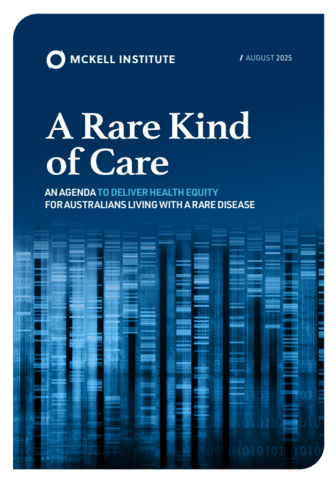
A rare kind of care: an agenda to deliver health equity for Australians living with rare disease
This report examines the current state of Australia’s rare disease policy landscape, identifying policy gaps, and provides eight recommendations aimed at ensuring all Australians living with a rare disease experience health equity. While each disease may be ‘rare’, collectively, rare diseases affect up to 8% of the Australian population.
Chapter
Holistic approaches to regulation of voluntary assisted dying
Regulation aims to enhance the safety and quality of voluntary assisted dying (VAD) and promote compliance with legal and system requirements. This chapter proposes that VAD regulation is more likely to be effective when it is designed in a holistic way. Research into and evaluations of VAD regulation should also adopt holistic approaches.
Report
Equity insights 2025: policy, power, and practice for a fairer Australian tertiary education system
This report brings together 22 voices from across the Australian higher education landscape to examine what has changed for student equity and what more needs to be done. Their contributions span three themed sections – Rewriting the system: policy, structures and reform; Power, voice and justice; and Making equity real: practice, place and participation.
Journal article
Co-designing with adults with acquired neurological disability in the community: a scoping review and thematic synthesis
This scoping review examines how and when co‑design is used with adults with acquired neurological disability and their lived experience. It finds co‑design remains under‑researched and underutilised, yet is meaningful, supporting participation, connection, belonging and learning. Future work should better define co‑design and invest in facilitation roles.